

The strongest non-fiction does not merely inform—it reorganizes perception. A serious work of history, philosophy, science, political analysis, or cultural criticism changes how readers understand causality, responsibility, and evidence itself. It does not offer facts as isolated units of knowledge, but arranges them into structures of interpretation. The result is not simple agreement, but intellectual displacement: the realization that what once seemed obvious was often only familiar.
In-depth non-fiction belongs to this demanding tradition. It asks readers to remain inside complexity rather than rushing toward certainty. Unlike fast commentary or market-driven summary, rigorous exposition depends on method. Its authority emerges not from confidence of tone, but from visible discipline—archives consulted, assumptions tested, contradictions preserved, and arguments sustained under pressure. The reader is not being persuaded to consume an opinion, but invited to witness how understanding is built.

Authority Must Be Demonstrated
Readers often confuse expertise with authority, yet the two are not identical. Credentials may establish access, but authority must be demonstrated through argument. A historian may possess extraordinary archival knowledge and still produce a weak interpretation if evidence is arranged to confirm a predetermined conclusion. Likewise, a philosopher may write with elegant certainty while avoiding conceptual difficulty rather than confronting it.
This is why works such as The Origins of Totalitarianism by Hannah Arendt remain foundational. Arendt’s achievement lies not simply in knowledge of twentieth-century political catastrophe, but in her refusal to reduce it to a single cause. Her analysis preserves complexity, showing how ideology, bureaucracy, loneliness, and structural violence interact rather than offering moral simplification.
Authority in non-fiction comes from this resistance to easy closure. It shows readers not only what happened, but why interpretation must remain difficult.
History as Interpretation, Not Storage
Many readers approach historical non-fiction as though the writer’s task were simply to retrieve the past accurately. Yet history is never neutral storage. Every history book is an argument about significance: what deserves attention, what counts as causality, and whose experience becomes representative.
Consider Guns, Germs, and Steel by Jared Diamond. Its enormous influence came from its attempt to explain civilizational inequality through geography and environmental conditions rather than cultural superiority. Whether one agrees fully with its conclusions or not, the book demonstrates how historical writing reshapes the scale of explanation itself. It asks readers to think structurally rather than morally.
Likewise, Howard Zinn’s A People’s History of the United States altered public discourse not by discovering unknown events, but by changing narrative focus—placing labor, indigenous history, and marginalized voices at the center of national memory. Selection became argument.
Serious exposition teaches readers to notice these choices rather than mistake them for neutrality.
Science Writing and the Ethics of Clarity
Scientific non-fiction faces a particular tension: how to remain accessible without becoming reductive. Readers need translation, but translation can become distortion when uncertainty is removed for the sake of narrative elegance. Precision must survive readability.
Stephen Hawking’s A Brief History of Time remains influential precisely because it made cosmological thought available to non-specialists without pretending that complexity could be dissolved into slogans. Its importance lies not only in explanation, but in demonstrating that intellectual difficulty is not an obstacle to public engagement.
Similarly, Rachel Carson’s Silent Spring transformed environmental writing because it joined scientific evidence to moral consequence without sacrificing rigor. It did not merely warn; it documented. The persuasive force came from method, not alarm.
When science writing becomes too certain, readers should become suspicious. Real inquiry includes limits, disagreement, and revision.
Institutions such as the Library of Congress, the British Library, and scholarly databases like JSTOR remain essential for readers and researchers seeking the archival foundations behind serious non-fiction, from political theory to scientific documentation and literary criticism.
Memoir and the Limits of Personal Authority
Memoir occupies an unstable but necessary place within rigorous non-fiction. Personal experience offers forms of access unavailable to detached analysis, yet lived experience does not automatically produce intellectual authority. Memory is perspective, not proof.
Works such as The Diary of a Young Girl by Anne Frank endure because they transform private observation into historical witness without claiming totality. The power lies in specificity. By contrast, weaker memoir often mistakes emotional sincerity for argument, treating personal truth as exemption from critical scrutiny.
The strongest memoirs recognize their own limits. They connect the intimate to larger systems—war, exile, class, gender, race, institutional violence—without assuming that experience alone settles interpretation.
Philosophy Written for Public Life
Rigorous exposition is not limited to academic language. Some of the most enduring non-fiction works are philosophically ambitious precisely because they remain publicly legible. George Orwell’s Politics and the English Language, for example, is remembered not simply as an essay about style, but as an argument about ethics. Language becomes political because clarity resists manipulation.
Michel Foucault’s Discipline and Punish operates differently—dense, theoretical, structurally demanding—yet its influence emerges from the same principle: explanation must reveal hidden systems rather than merely describe visible events. Institutions, surveillance, and normalized power become readable only through conceptual precision.
Different forms, same responsibility: to make readers see what ordinary language often conceals.

Why Some Books Age Immediately
Many celebrated non-fiction books disappear quickly because they are built around temporary consensus rather than durable thinking. They respond to the emotional vocabulary of a specific moment without constructing concepts that survive it. Their urgency expires with the news cycle.
By contrast, works like Yuval Noah Harari’s Sapiens generated global attention because they attempted large-scale synthesis, asking how narrative itself structures human civilization. Whether one accepts every claim is secondary to the fact that the book sought explanatory architecture rather than commentary alone.
Durability comes from frameworks. Readers return to books that continue generating interpretation, not merely reflecting headlines.
Why This Perspective Still Matters
In a culture of accelerated information, rigorous non-fiction becomes a form of resistance. It slows judgment. It asks readers to remain inside contradiction long enough for understanding to become possible. This discipline matters far beyond literature because public life depends on how people read evidence.
Political manipulation thrives where method is invisible. Historical amnesia thrives where archives are ignored. Scientific distrust grows where explanation is replaced by performance. Strong non-fiction protects against all three by making intellectual process visible.
Criticism, therefore, is not hostile to knowledge. It is what prevents knowledge from becoming authority without accountability.
Continue Exploring Critical Non-Fiction
If you are interested in how research-based works reshape public thought, you may also explore our essays on historical revision, documentary truth, and the relationship between narrative authority and institutional trust across contemporary nonfiction publishing.
Readers drawn to broader structural questions may also revisit our long-form analyses of literary criticism, philosophical prose, and the ethics of explanation in high-value research writing.
Frequently Asked Questions
What makes a non-fiction book intellectually rigorous?
Rigorous non-fiction combines evidence, method, and conceptual precision. It shows how conclusions are reached rather than relying on rhetorical confidence alone.
Why are famous works like Silent Spring still important today?
Because they changed how readers understood systems rather than isolated events. Their value lies in explanatory structure, not only historical relevance.
Can memoir be considered serious non-fiction?
Yes—when personal experience becomes inquiry rather than unquestioned authority. Strong memoir connects private life to broader historical and social realities.
Why do some bestselling non-fiction books age quickly?
Because they depend on temporary public consensus instead of durable frameworks. Books last when they teach readers how to think, not only what to think.
Reviewed for editorial quality, research integrity, and content accuracy.
Conclusion: Reading for Method, Not Just Meaning
The best non-fiction does not merely answer questions; it teaches readers how serious questions should be asked. Its deepest value lies in method—the visible discipline through which evidence becomes interpretation and interpretation becomes understanding.
To read these works critically is to refuse passive trust. It means asking how authority is constructed, what assumptions remain hidden, and whether the book expands perception rather than simply confirming belief. Great exposition leaves the reader less certain, but more capable of thinking clearly.
That is why rigorous non-fiction remains one of literature’s most necessary forms. It resists simplification, protects complexity, and reminds us that knowledge worthy of trust is never built without scrutiny.

Bibliographic Foundation
This analysis was conducted under the Sanctum's methodological rigor, utilizing exegetical protocols grounded in universal heritage repositories and documented preservation archives.
View Authority FoundationsAnalytical Recommendations
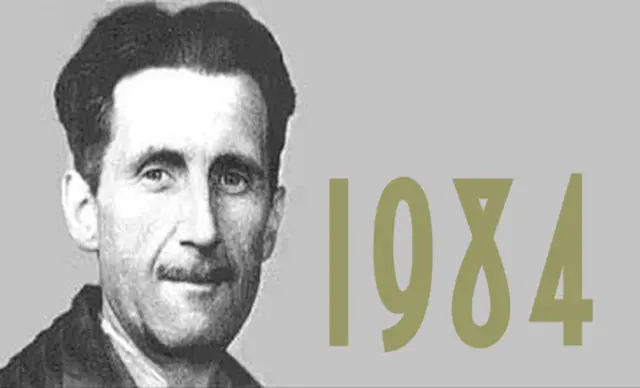
1984: Power, Language, and the Architecture of Psychological Domination
Few novels have entered the cultural bloodstream with the enduring force of Nineteen Eighty-Four. Frequently invoked in political rhetoric and popular discourse, the book is often reduced to a set of familiar images: omnipresent surveillance, totalitarian authority, the erasure of privacy.
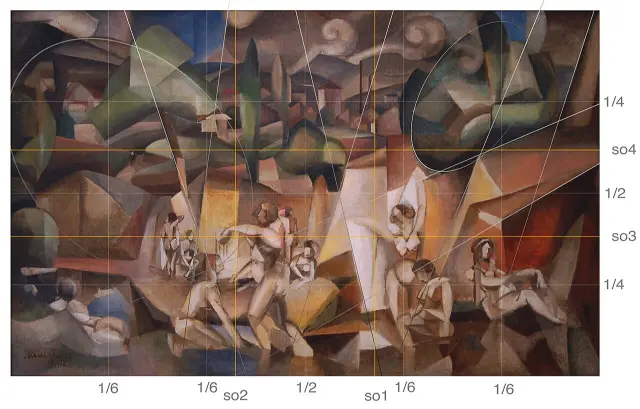
Modernism and the Wreckage of Certainty: Literature in the Age of Fractured Time
Modernism and the Wreckage of Certainty: Literature in the Age of Fractured Time. Literary modernism did not arise as a stylistic fashion. It emerged as a philosophical rupture. The early twentieth century confronted writers with a world whose inherited frameworks of meaning had begun to fail under the pressure of unprecedented historical shocks. Industrial acceleration, mechanized warfare, the collapse of empires, and the erosion of religious and social certainties produced not merely political instability, but epistemic disorientation.

Literature as Cultural Mirror: Power, Class, and the Social Imagination in Industrial Society
Literature as Cultural Mirror: Power, Class, and the Social Imagination in Industrial Society. Literature does not merely tell stories; it records tensions. It registers, often with greater precision than formal historical accounts, the invisible pressures shaping a society’s moral and material life. Nowhere is this function more evident than in narratives that emerge from periods of rapid transformation—moments when economic systems shift, social hierarchies destabilize, and the language available to describe experience struggles to keep pace with lived reality.