
Sociocultural Impact: Literature as Cultural Mirror
Overview
Analysis of how literature reflects, critiques, and influences society and politics.
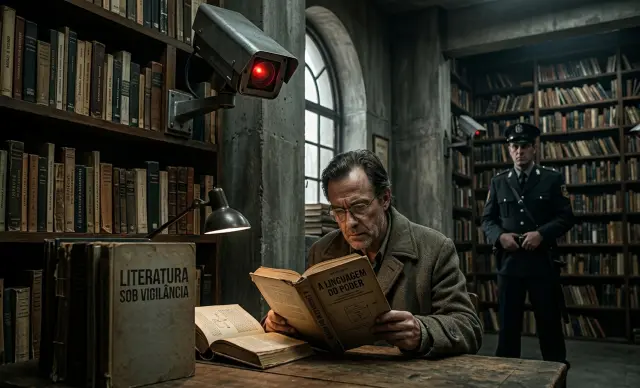
Literature Under Surveillance: Power, Language, and the Anatomy of Control in Totalitarian Societies
Literature Under Surveillance: Power, Language, and the Anatomy of Control in Totalitarian Societies. Literature becomes most urgent when freedom contracts. In moments where political systems extend their reach beyond institutions and into consciousness itself, narrative ceases to be mere representation and becomes a form of resistance—sometimes overt, often subtle, always necessary. It is within such conditions that fiction assumes a dual role: as documentation of lived realities and as critique of the mechanisms that seek to control them.
Read Analysis →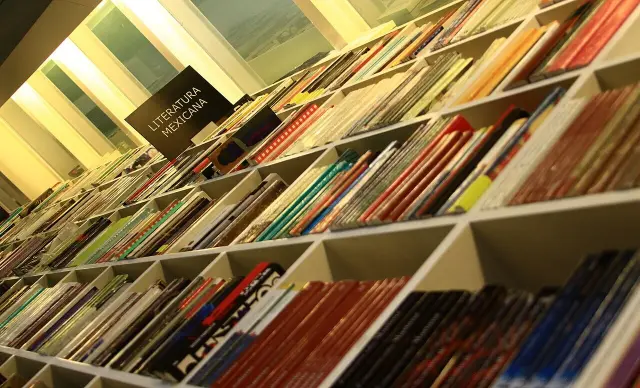
Literature as Cultural Mirror: Power, Class, and the Social Imagination in Industrial Society
Literature as Cultural Mirror: Power, Class, and the Social Imagination in Industrial Society. Literature does not merely tell stories; it records tensions. It registers, often with greater precision than formal historical accounts, the invisible pressures shaping a society’s moral and material life. Nowhere is this function more evident than in narratives that emerge from periods of rapid transformation—moments when economic systems shift, social hierarchies destabilize, and the language available to describe experience struggles to keep pace with lived reality.
Read Analysis →
Literature and the Burden of Memory: Race, Identity, and the Reconstruction of Human Dignity
Literature and the Burden of Memory: Race, Identity, and the Reconstruction of Human Dignity. Literature assumes its most transformative function when it confronts histories that resist closure. There are pasts that do not remain confined to chronology—pasts that persist as structure, as inheritance, as unresolved presence within the present. In such contexts, narrative becomes more than representation; it becomes a site of reckoning. It gives form to experiences that have been suppressed, fragmented, or systematically excluded from dominant historical accounts.
Read Analysis →