

Realism and the Discipline of the Ordinary: Literature in the Age of Social Visibility. If Romanticism elevated the inner world and imagination as a response to mechanized reality, Realism emerges as a corrective movement—one that redirects attention outward, toward the material, social, and economic conditions shaping human existence. Far from a rejection of depth, Realism represents a reorientation of it. It insists that meaning is not found only in transcendence or subjective intensity, but in the structures of everyday life: work, class, institutions, and the quiet pressures of social expectation.
In the nineteenth century, as industrialization reconfigured societies and urban life intensified human proximity without guaranteeing connection, literature faced a new imperative: to render visible the systems that govern ordinary existence. Realism answers this demand not through spectacle, but through attentiveness. It disciplines the literary gaze, stripping away idealization in favor of observation, complexity, and moral ambiguity.
The Ordinary as Ethical Territory
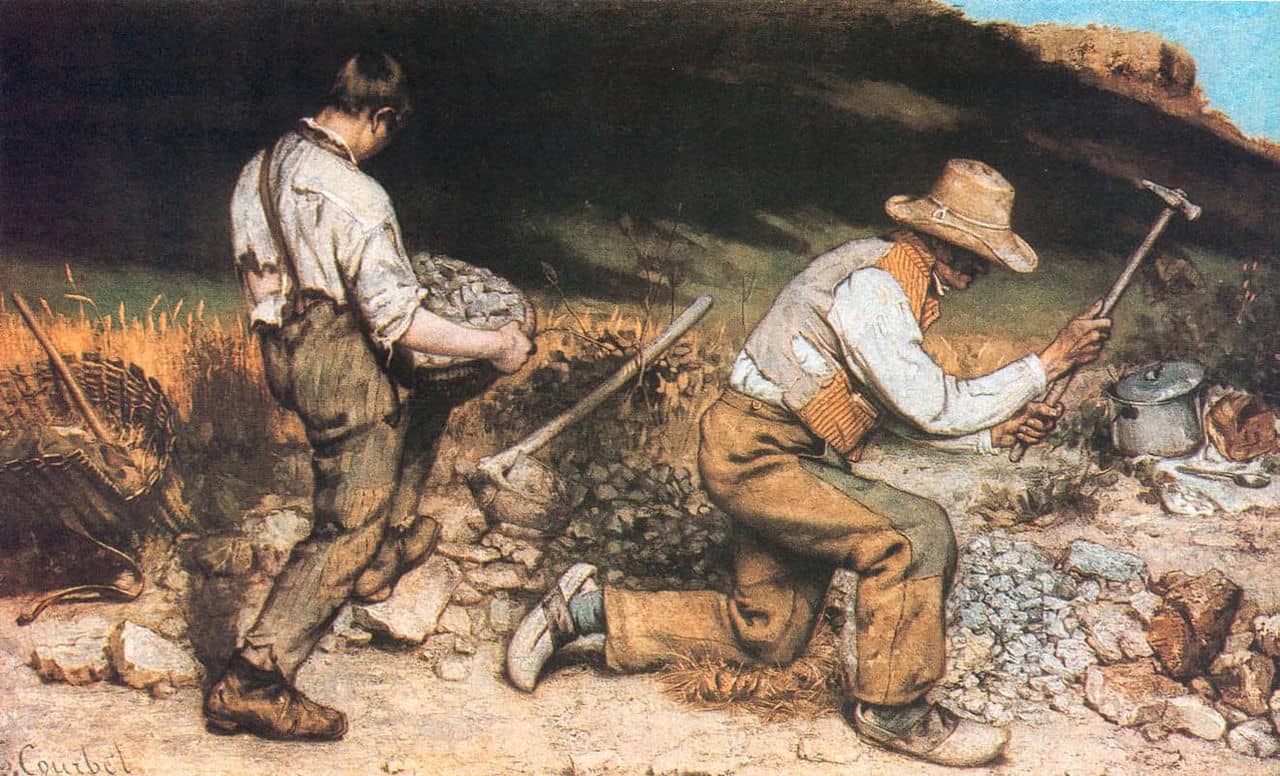
Realism’s most radical gesture lies in its elevation of the ordinary. Where earlier traditions sought the exceptional—the heroic, the sublime, the mythic—Realist literature turns toward the everyday. This shift is not a diminishment of literary ambition, but an expansion of ethical scope. By focusing on common lives, Realism asserts that significance is not reserved for the extraordinary.
The mundane becomes a site of moral inquiry. Decisions that appear minor—financial choices, social interactions, professional compromises—are revealed as deeply consequential. Realism exposes how structures of class, gender, and economic constraint shape these decisions, often without overt coercion. Freedom, in this framework, is neither absolute nor illusory; it is negotiated within limits.
Detail, Description, and the Ethics of Observation
Realist writing is often associated with detailed description, but this stylistic feature is not merely aesthetic. Detail functions as a form of ethical commitment. To describe precisely is to take the world seriously—to resist simplification and to honor complexity.
Objects, environments, and gestures acquire narrative significance not because they symbolize something beyond themselves, but because they reveal the conditions under which people live. A room, a garment, a meal—these elements become indicators of class position, aspiration, limitation, and identity. The material world is not inert; it participates in the shaping of experience.
This attention to detail reflects a broader epistemological stance. Realism assumes that truth emerges through careful observation rather than abstraction. It rejects the temptation to impose meaning prematurely, allowing significance to arise from accumulation rather than declaration.
Social Structures and Invisible Constraints
One of Realism’s central insights is that human behavior cannot be understood in isolation from social structures. Individuals act within systems that both enable and restrict their choices. These systems—economic, legal, cultural—often operate invisibly, shaping outcomes without announcing their presence.
Realist literature makes these structures visible. It reveals how inequality is reproduced not only through overt injustice, but through normalized practices and expectations. Characters are rarely free agents in the absolute sense; they are situated beings, navigating constraints that are at once external and internalized.
Narrative Impartiality and Moral Complexity
Unlike movements that foreground authorial intervention, Realism often adopts a stance of narrative restraint. The narrator observes, records, and presents, allowing the reader to engage with the material without overt guidance. This apparent neutrality is itself a deliberate strategy.
By withholding explicit judgment, Realist narratives create space for moral complexity. Characters are not reduced to moral categories; they are rendered in their contradictions. Virtue and flaw coexist. Good intentions produce harmful outcomes. Self-interest disguises itself as necessity. This refusal of simplification reflects a commitment to intellectual honesty.
Time, Causality, and the Logic of Consequence
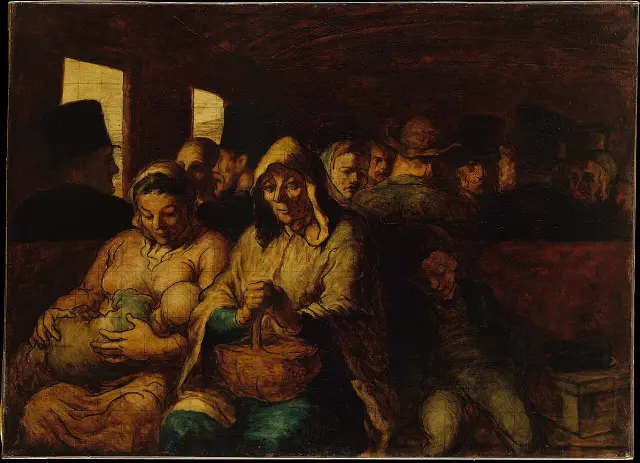
Realism reasserts the importance of causality, but not in a deterministic sense. Events unfold through a chain of conditions and decisions, each influencing the next. This emphasis on consequence reinforces the movement’s ethical orientation. Actions matter not because they align with abstract ideals, but because they produce tangible effects within a network of relationships.
Time, in Realist narratives, is neither mythic nor fragmented. It is lived—incremental, cumulative, and often unforgiving. Change occurs gradually, shaped by persistence rather than revelation. This temporal structure mirrors the rhythms of actual life, where transformation is rarely immediate.
Why Realism Still Matters
The relevance of Realism extends beyond its historical moment because the conditions it engages remain active. Questions of inequality, social mobility, institutional power, and the tension between individual agency and structural constraint continue to define contemporary life.
In an era often characterized by abstraction—data, metrics, digital representation—Realism’s commitment to the concrete acquires renewed importance. It reminds us that systems are lived by individuals, that policies translate into experiences, and that the ordinary remains a crucial site of meaning. To read Realism today is to practice a form of attention that resists oversimplification.
Conclusion: The Moral Weight of Seeing Clearly
Realism does not promise transcendence. It offers something more demanding: clarity. It asks the reader to see the world without the consolations of idealization or the distortions of abstraction. In doing so, it restores dignity to the ordinary and seriousness to the act of observation.
By grounding literature in the textures of lived experience, Realism affirms that meaning is not imposed from above, but discovered within the intricate interplay of individuals and structures. It is a movement that teaches not how to escape reality, but how to encounter it—fully, honestly, and without illusion.


Bibliographic Foundation
This analysis was conducted under the Sanctum's methodological rigor, utilizing exegetical protocols grounded in universal heritage repositories and documented preservation archives.
View Authority FoundationsAnalytical Recommendations

The Lord of the Rings: Mythopoesis, Power, and the Theology of Hope
ew works of modern literature have constructed a moral universe with the depth and coherence of The Lord of the Rings. Frequently remembered for its epic battles, vast geography, and mythic gravitas, the narrative resists reduction to spectacle alone. Beneath its grand scale lies a disciplined ethical inquiry into power: how it seduces, how it corrodes intention, and how resistance often emerges not from heroic exceptionalism, but from ordinary fidelity to what is small, local, and fragile.

Fiction After Stability: How the Contemporary Novel Reflects Fragmented Consciousness
The contemporary novel no longer asks only what stories should be told—it asks what form can still contain modern consciousness. In an age shaped by digital exposure, ecological dread, fractured identity, migration, and the collapse of stable public narratives, fiction has been forced to renegotiate its own architecture. The result is not a single literary movement, but a series of formal tensions: between confession and invention, intimacy and performance, realism and surrealism, memory and algorithm, national history and displaced belonging.

The Little Prince: A Philosophy of Tenderness, Responsibility, and the Tragedy of Growing Up
Few works of modern literature occupy such a paradoxical space in cultural memory as The Little Prince. It is frequently categorized as a children’s tale, gifted to young readers with the assumption of simplicity, yet it is quietly revered by adults as a meditation on loss, love, and moral perception.