

Modernism and the Wreckage of Certainty: Literature in the Age of Fractured Time. Literary modernism did not arise as a stylistic fashion. It emerged as a philosophical rupture. The early twentieth century confronted writers with a world whose inherited frameworks of meaning had begun to fail under the pressure of unprecedented historical shocks. Industrial acceleration, mechanized warfare, the collapse of empires, and the erosion of religious and social certainties produced not merely political instability, but epistemic disorientation. The modernist movement registers this disorientation not as spectacle, but as form: a transformation of how narrative itself could carry meaning in a world where coherence no longer felt guaranteed.
At the heart of modernism lies a crisis of continuity. The long nineteenth century had cultivated faith in progress, narrative closure, and moral legibility. Modernist writers inherit these structures only to dismantle them. Their formal innovations—fragmented chronology, unreliable narration, interior monologue, and aesthetic opacity—are not ornamental. They are ethical responses to historical fracture. The movement asks not how to represent the world as it appears, but how to represent consciousness in a world whose organizing narratives have lost credibility.
From Linear Progress to Shattered Temporality
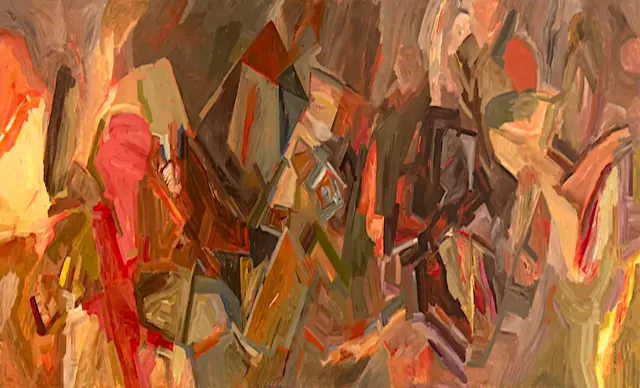
One of the defining shifts of modernism is its reconfiguration of time. Traditional narrative assumes that time can be organized into a coherent sequence: beginning, development, resolution. Modernist literature disrupts this logic. Time becomes discontinuous, recursive, and subjective. Memory intrudes upon the present; anticipation distorts perception; chronology dissolves into impression.
This temporal fracture reflects a deeper historical condition. The Great War did not simply interrupt lives; it ruptured the assumption that history moved toward moral improvement. In this context, linear narrative risks appearing dishonest. To impose order on temporal experience would be to deny the lived reality of fragmentation. Modernist form thus enacts a refusal of false coherence. It mirrors the psychological condition of a generation for whom time itself had become unstable.
The modernist treatment of time reveals a philosophical wager: that truth is not best accessed through seamless narrative continuity, but through the faithful representation of discontinuity. Fragmentation becomes not a defect, but a method of ethical accuracy.
Interior Consciousness as Historical Archive
Modernism relocates narrative authority from external description to interior perception. The inner life of characters becomes the primary site of meaning-making. This shift reflects a growing awareness that historical upheaval does not merely transform institutions; it reconfigures subjectivity itself. The psyche becomes an archive of social trauma, recording the pressures of modern life in the rhythms of thought, anxiety, and desire.
By foregrounding interior consciousness, modernist literature refuses the illusion that historical forces operate only at the level of events. It insists that modernity’s disruptions are lived from within. Alienation, fatigue, and perceptual overload become formal features of narrative style. The sentence itself begins to carry the weight of historical fracture. Syntax fragments. Perspective wavers. Coherence must be assembled rather than assumed. This inward turn is not solipsistic retreat. It is a recognition that historical experience is mediated through perception.
Disenchantment and the Crisis of Meaning
The modernist period is marked by disenchantment—not as mere pessimism, but as the collapse of inherited sources of moral authority. Religious certainties wane. Imperial narratives lose legitimacy. Social hierarchies appear increasingly arbitrary. In this vacuum, literature confronts a question that is not merely aesthetic but ethical: how does one write meaning after the erosion of shared metaphysical ground?
Modernist writers respond not by offering new totalizing systems, but by staging the difficulty of meaning itself. Their works dramatize uncertainty rather than resolve it. The reader is not guided toward moral closure but confronted with interpretive labor. Meaning becomes provisional, contested, and unstable. This instability is not a failure of the movement; it is its historical signature.
In this sense, modernist opacity is not elitist obscurity. It is the formal trace of a culture whose confidence in transparency has been ethically compromised.
The Ethics of Formal Experiment
Modernist experimentation is often described in aesthetic terms, but its deeper stakes are ethical. To fracture narrative form is to refuse the comfort of inherited structures that no longer correspond to lived reality. Formal difficulty becomes a mode of moral seriousness. The reader is asked not merely to consume a story, but to participate in the labor of reconstruction.
This demand reconfigures the relationship between text and audience. Reading becomes an ethical practice of attention. The reader must learn to inhabit ambiguity, to tolerate uncertainty, and to resist premature closure. Modernism thus trains a different kind of reader—one attuned to the fragility of meaning in a fractured world. The movement’s formal difficulty, then, is not an aesthetic indulgence. It is a pedagogical gesture.
Why Modernism Still Matters
Modernism endures not because of its stylistic novelty, but because the historical conditions that produced it have not vanished. The contemporary world continues to experience accelerated change, epistemic instability, and fractured authority. The modernist confrontation with uncertainty remains instructive precisely because it refuses false reassurance.
To read modernism today is to encounter a tradition that takes instability seriously. It does not offer consolation through coherence alone. It offers instead a disciplined engagement with fragmentation as a condition of modern life. In doing so, it provides not answers, but forms of attentiveness suited to a world in which certainty remains contested.
Conclusion: Literature After the Fall of Coherence
Modernism represents a turning point in literary history not because it rejected the past wholesale, but because it exposed the ethical costs of inherited forms. It recognized that narrative coherence, when unexamined, can become a form of denial. In the wake of historical rupture, to write responsibly required new forms capable of bearing the weight of fracture.
The modernist movement thus stands as a testament to literature’s capacity to register historical trauma not only in content, but in form. It marks the moment when storytelling became self-conscious about its own limits—and in doing so, discovered new ways of telling the truth about a world no longer held together by inherited certainties.

Bibliographic Foundation
This analysis was conducted under the Sanctum's methodological rigor, utilizing exegetical protocols grounded in universal heritage repositories and documented preservation archives.
View Authority FoundationsAnalytical Recommendations
Literature Without a Center: The Structural Rise of Global Diaspora Voices
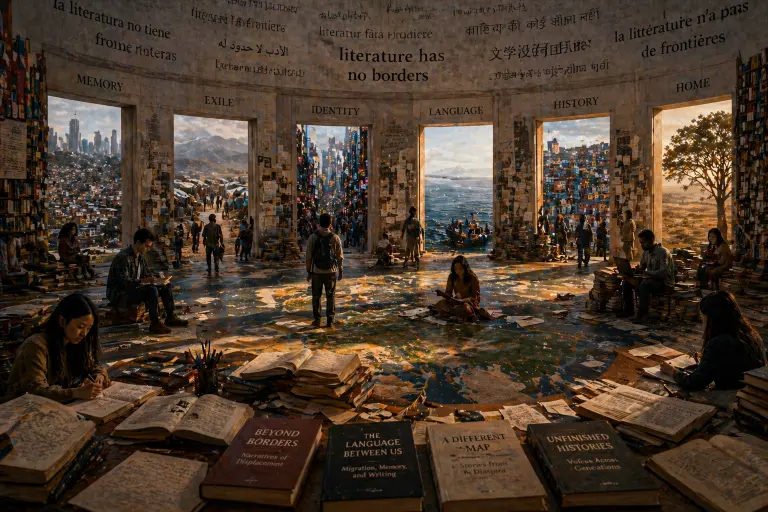
The contemporary novel is no longer anchored to a single cultural center. Over the last decade, literary authority has shifted in ways that are both visible and structural. The global circulation of prizes, translations, and readership has made one fact increasingly unavoidable: the narratives that define our era are no longer being written exclusively from within traditional Western frameworks. Instead, they emerge from movement—migration, exile, linguistic displacement, and historical fracture.

The Little Prince: A Philosophy of Tenderness, Responsibility, and the Tragedy of Growing Up
Few works of modern literature occupy such a paradoxical space in cultural memory as The Little Prince. It is frequently categorized as a children’s tale, gifted to young readers with the assumption of simplicity, yet it is quietly revered by adults as a meditation on loss, love, and moral perception.
The Architecture of Wonder: Balancing Logic and Mystery in Worldbuilding
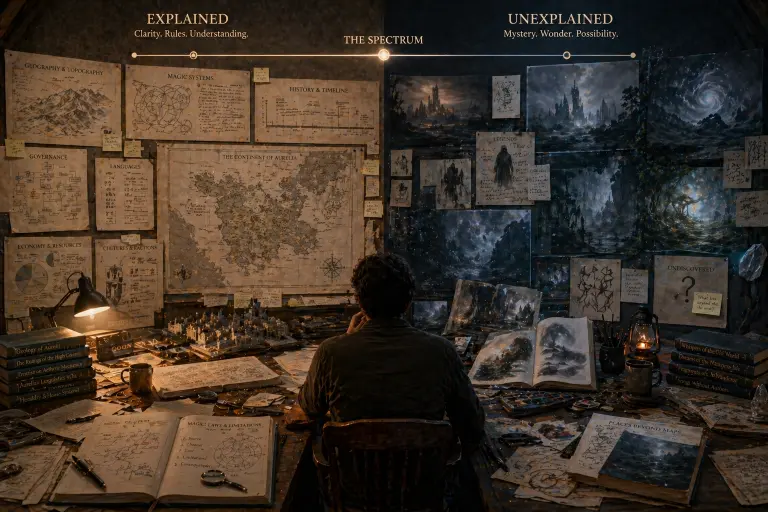
Every fictional world makes a demand on the reader long before its story fully unfolds. That demand is not only emotional or thematic—it is cognitive. To enter a constructed reality is to accept a system of rules, visible or hidden, that governs how meaning operates inside it. Some worlds explain themselves with rigorous precision, inviting the reader to understand their mechanics in detail. Others withhold explanation, allowing mystery to function as structure. Between these approaches lies a spectrum that defines how immersion is achieved and how curiosity is sustained.