

Literature Under Surveillance: Power, Language, and the Anatomy of Control in Totalitarian Societies. Literature becomes most urgent when freedom contracts. In moments where political systems extend their reach beyond institutions and into consciousness itself, narrative ceases to be mere representation and becomes a form of resistance—sometimes overt, often subtle, always necessary. It is within such conditions that fiction assumes a dual role: as documentation of lived realities and as critique of the mechanisms that seek to control them.
Few works embody this dual function with the precision of Nineteen Eighty-Four, by George Orwell. Frequently approached as dystopian speculation, the novel is more accurately understood as a sociocultural anatomy of power—an exploration of how authority operates not only through force, but through language, memory, and perception.

Power Beyond Coercion: The Internalization of Authority
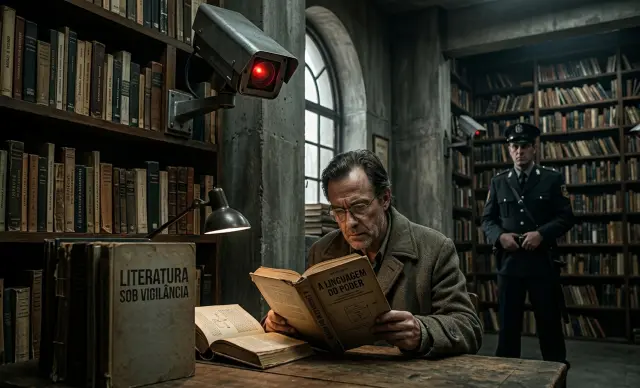
Traditional understandings of power emphasize visible domination—laws, punishments, institutions. Yet Nineteen Eighty-Four shifts attention to a more insidious form: power that no longer needs to assert itself externally because it has been internalized. Individuals do not merely obey; they anticipate authority. They regulate themselves.
This internalization reflects a broader sociocultural insight. The most effective systems of control are those that transform external pressure into internal conviction. Surveillance becomes psychological. Obedience becomes habitual. The boundary between self and system dissolves.
The novel thus reveals that domination is not sustained by force alone, but by the restructuring of consciousness. When individuals lose the ability to distinguish between imposed narratives and lived reality, resistance becomes not only dangerous, but conceptually difficult.
Language as Instrument of Control
One of the most profound contributions of Nineteen Eighty-Four to sociocultural analysis lies in its treatment of language. Language is not presented as a neutral medium, but as a tool actively shaped to limit thought. Vocabulary is reduced. Nuance is eliminated. Expression is constrained.
This manipulation reflects a fundamental principle: what cannot be articulated becomes difficult to conceive. By narrowing linguistic possibility, systems of power narrow cognitive possibility. The range of thought contracts alongside the range of words.
This insight extends beyond the fictional world of the novel. It invites reflection on how language operates in any society—how political discourse, media framing, and institutional terminology influence perception. Control over language is, in effect, control over the boundaries of imagination.
Memory, History, and the Fragility of Truth
In the world of Nineteen Eighty-Four, the past is not fixed; it is continuously rewritten. Records are altered. Events are reinterpreted. Contradictions are erased. History becomes fluid, shaped to serve present authority.
This instability exposes a critical sociocultural vulnerability. Collective memory is not self-sustaining; it depends on preservation, transmission, and trust. When these processes are disrupted, the past becomes malleable. Without a stable reference point, individuals lose the ability to evaluate the present.
The novel suggests that truth is not merely a matter of fact, but of continuity. It requires a relationship between past and present that can be recognized and maintained. When this relationship is severed, truth becomes indistinguishable from assertion.
Isolation and the Breakdown of Solidarity
A recurring feature of controlled societies is the fragmentation of social bonds. In Nineteen Eighty-Four, relationships are marked by suspicion. Trust is dangerous. Intimacy is monitored. Individuals are encouraged to view one another not as allies, but as potential threats.
This erosion of solidarity is not incidental; it is strategic. Collective resistance depends on shared understanding and mutual trust. By disrupting these conditions, systems of control weaken the possibility of organized opposition. Isolation becomes a mechanism of stability.
The Body as Site of Power
Control in Nineteen Eighty-Four extends beyond thought into the body itself. Physical experience—pain, pleasure, fatigue—is manipulated to reinforce authority. The body becomes a site where abstract power is made tangible.
This dimension underscores the totalizing nature of the system. It is not sufficient to command belief; belief must be embodied. The distinction between internal and external collapses. Power operates simultaneously at the level of idea and sensation.
Why Literature of Control Still Matters
The enduring relevance of Nineteen Eighty-Four lies not in its specific predictions, but in its structural insights. It identifies patterns of control that can manifest in varying forms across different contexts. Surveillance, manipulation of information, erosion of trust—these are not confined to a single historical moment.
In contemporary societies, where information flows rapidly and authority is often mediated through complex systems, the novel’s concerns remain strikingly pertinent. The mechanisms may evolve, but the underlying dynamics persist.
Conclusion: The Responsibility of Recognition
Nineteen Eighty-Four does not offer comfort. It offers clarity—often unsettling, always necessary. As a work of sociocultural impact, it demonstrates that literature’s power lies not only in reflection, but in revelation. It exposes the structures that shape perception, the forces that constrain thought, and the fragility of conditions often taken for granted.
To read such a work is to engage in an act of recognition. It is to acknowledge that the boundaries of freedom are not fixed, and that the preservation of truth requires vigilance—not only from institutions, but from individuals.
In this sense, literature becomes more than mirror or critique. It becomes a form of awareness—one that insists, quietly but persistently, that understanding is the first condition of resistance.

Bibliographic Foundation
This analysis was conducted under the Sanctum's methodological rigor, utilizing exegetical protocols grounded in universal heritage repositories and documented preservation archives.
View Authority FoundationsAnalytical Recommendations
Modernism and the Wreckage of Certainty: Literature in the Age of Fractured Time
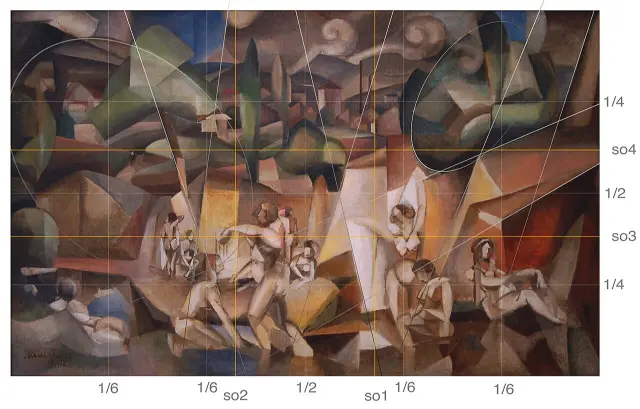
Modernism and the Wreckage of Certainty: Literature in the Age of Fractured Time. Literary modernism did not arise as a stylistic fashion. It emerged as a philosophical rupture. The early twentieth century confronted writers with a world whose inherited frameworks of meaning had begun to fail under the pressure of unprecedented historical shocks. Industrial acceleration, mechanized warfare, the collapse of empires, and the erosion of religious and social certainties produced not merely political instability, but epistemic disorientation.

The Invisible Craft: Consistency and Coherence in Narrative Environments
Astory rarely announces the rules of its world outright. Instead, it teaches the reader how to see. A gesture here, a constraint there, a detail that seems incidental until it quietly proves decisive—these are the building blocks of immersion. What matters is not how much is explained, but how naturally everything holds together. When a narrative environment feels convincing, it is because its logic has been absorbed rather than declared, experienced rather than outlined.

Romanticism and the Rebellion of the Inner World: Imagination, Nature, and the Refusal of Mechanized Reality
Romanticism and the Rebellion of the Inner World: Imagination, Nature, and the Refusal of Mechanized Reality. If literary modernism represents the fracture of certainty, Romanticism represents the refusal of its premature consolidation. Emerging in the late eighteenth and early nineteenth centuries, Romanticism was not merely a stylistic shift but a profound philosophical rebellion against the accelerating rationalization of human life. It arose in response to the Enlightenment’s elevation of reason as the primary arbiter of truth and the Industrial Revolution’s transformation of nature into resource, labor into mechanism, and time into measurable productivity.