

Literature often begins where certainty collapses. The most enduring works of fiction do not merely entertain readers with conflict or spectacle; they force confrontation with dilemmas that resist stable resolution. Law opposes conscience. Memory dissolves identity. Idealism mutates into domination. Meaning itself appears fragile before an indifferent universe.
These narratives endure because they transform fiction into a laboratory of moral and psychological pressure. Within their structures, readers are invited to test the limits of obedience, responsibility, memory, leadership, and survival. Literature becomes not an escape from reality, but a mechanism for examining the hidden architecture beneath human behavior.

The Conflict Between Individual Ethics and the Social Contract
One of literature’s oldest and most enduring tensions emerges when moral integrity collides with institutional authority. The individual recognizes a law, command, or social expectation as unjust, yet obedience remains socially mandatory. The result is a conflict not merely between characters, but between competing definitions of legitimacy itself.
In Antigone, Sophocles constructs precisely this dilemma. Antigone violates the decree of King Creon because her moral obligations transcend political authority. The tragedy does not emerge because either side lacks logic; it emerges because both systems of obligation are internally coherent yet fundamentally incompatible.
Similarly, in Les Misérables, Victor Hugo explores the conflict between legal order and moral redemption through the figure of Jean Valjean. The law identifies him permanently as a criminal, while his ethical transformation challenges the legitimacy of that categorization.
These narratives function as moral tribunals. Literature creates hypothetical environments where readers test the boundaries of obedience and conscience without real-world consequences. Fiction becomes a space where society interrogates itself.
Importantly, such works rarely endorse pure rebellion. Instead, they examine the cost of resistance. Moral courage often requires social isolation, punishment, sacrifice, or public misunderstanding. The protagonist who violates unjust norms rarely emerges untouched.
This complexity explains why these stories remain culturally powerful. They force readers to confront a deeply uncomfortable distinction: legality and justice are not always identical.
In professional and social environments, this distinction possesses immediate relevance. Organizations frequently normalize unethical behavior through procedural legitimacy. Harmful practices become “acceptable” because they conform to institutional expectations.
Literature therefore cultivates civil courage. It trains readers to recognize moments when external compliance threatens internal integrity. The essential question becomes not merely “What am I allowed to do?” but “What kind of person do I become by obeying?”
The Ontology of Memory: Identity Against Forgetting
Human identity depends less on objective continuity than on narrative continuity. We become ourselves through remembered experience. Memory organizes emotional history into a coherent sense of self.
Literature repeatedly returns to this fragile architecture because memory itself is unstable. It fades, distorts, protects, and destroys simultaneously.
In works such as Never Let Me Go by Kazuo Ishiguro or In Search of Lost Time by Marcel Proust, memory functions not as passive recollection, but as existential structure. Characters attempt to preserve meaning against the erosion of time.
Proust famously transforms involuntary memory into revelation. A sensory experience unexpectedly resurrects forgotten emotional worlds, suggesting that identity survives in fragments hidden beneath conscious awareness.
By contrast, Ishiguro often portrays memory as selective protection. Characters unconsciously suppress painful truths in order to preserve psychological stability. Forgetting becomes both defense mechanism and existential loss.
This paradox lies at the center of memory’s ontology: forgetting can preserve survival while simultaneously dissolving identity.
Modern digital culture intensifies this tension dramatically. Contemporary life generates unprecedented informational excess while simultaneously weakening long-term continuity. Experiences are documented constantly yet remembered superficially. Information circulates rapidly but rarely stabilizes into personal meaning.
The result is a fragmented relationship with the self. Without coherent narrative continuity, individuals risk becoming psychologically reactive rather than historically grounded.
Literature offers resistance to this fragmentation by emphasizing reflective memory rather than informational accumulation. The question is not how much we remember, but which memories become structurally central to our identity.
Preserving the self therefore requires curating personal narrative intentionally. Reflection, journaling, long-term goals, and meaningful rituals become mechanisms for resisting existential disintegration in environments dominated by distraction and ephemerality.

The Dialectic of Power and the Corruption of Ideals
Many literary works begin with utopian aspirations. Characters seek equality, liberation, justice, or collective harmony. Yet as narratives progress, idealism frequently mutates into domination.
This transformation reveals one of literature’s deepest political insights: systems built to eliminate oppression may reproduce it through new forms.
In Animal Farm, George Orwell demonstrates how revolutionary language gradually becomes indistinguishable from authoritarian propaganda. The original promise of equality deteriorates into hierarchy, surveillance, and manipulation.
Similarly, Lord of the Flies portrays the collapse of cooperative order into tribal violence and tyranny. Civilization appears frighteningly fragile when institutional constraints disappear.
Importantly, these narratives rarely portray corruption as sudden. Tyranny emerges incrementally through rationalization, fear, symbolic control, and concentration of authority.
This gradualism matters profoundly. Dangerous systems rarely identify themselves openly at the beginning. They present themselves as necessary, efficient, protective, or morally justified.
Literature therefore trains readers to recognize structural warning signs. Excessive centralization of authority, suppression of dissent, emotional manipulation, scapegoating, and moral absolutism often precede institutional corruption.
The dialectic of power reveals that leadership cannot be evaluated solely through declared ideals. It must be evaluated through incentives, structures, accountability, and behavioral patterns.
This insight possesses enormous relevance in modern professional and social contexts. Toxic workplaces, manipulative leadership cultures, and ideological extremism frequently operate through the same psychological dynamics explored in fiction.
Critical literacy becomes a form of self-protection. Literature encourages vigilance against simplistic narratives of salvation offered by charismatic authority.
The most dangerous systems are often those convinced of their own moral purity.
Man Versus the Absurd: Meaning Within Chaos
Perhaps no modern literary question feels more psychologically urgent than the confrontation between human consciousness and an apparently indifferent universe.
Existentialist literature repeatedly examines this collision. The world appears chaotic, irrational, or emotionally silent. Traditional structures of certainty collapse. Yet the individual must continue acting despite the absence of guaranteed meaning.
In the works of Albert Camus or Franz Kafka, characters encounter systems that resist explanation. Bureaucracy becomes incomprehensible. Justice appears arbitrary. Existence itself lacks stable coherence.
Kafka’s protagonists often struggle against opaque structures that render human effort absurdly insufficient. Camus, by contrast, argues that dignity emerges precisely through conscious resistance against meaninglessness.
The absurd does not necessarily imply despair. Instead, existential literature suggests that meaning is not discovered as a preexisting property of reality. It is constructed through choice, action, responsibility, and persistence.
This distinction changes the emotional logic of crisis entirely.
Many personal collapses occur because individuals assume meaning must arrive externally through recognition, certainty, institutional validation, or permanent stability. When those structures fail, psychological paralysis emerges.
Existentialist literature offers a different model. Purpose becomes an active creation rather than a passive discovery.
The individual may not control chaos, suffering, or uncertainty. Yet they retain authority over response, interpretation, and ethical action.
This perspective functions as a form of existential resilience. Career collapse, grief, failure, and uncertainty no longer invalidate meaning automatically. Instead, they become conditions within which meaning must be rebuilt deliberately.
The absurd therefore becomes not the destruction of human dignity, but the environment in which dignity proves itself.
Literature as Ethical and Psychological Infrastructure
Across these themes—moral resistance, memory, corruption, and existential meaning—a common function emerges. Literature provides simulated environments for testing psychological and ethical responses to pressure.
Stories allow readers to rehearse complexity before confronting it directly in reality.
The value of fiction therefore extends far beyond entertainment. Literary structures become tools for cognitive preparation. They sharpen discernment, strengthen self-awareness, and cultivate emotional resilience.
In moments of uncertainty, readers frequently return not to instruction manuals, but to narratives. Fiction persists because it models what human experience feels like from the inside.
Why These Themes Matter Today
Contemporary life intensifies many of the tensions literature has explored for centuries. Social pressure increasingly shapes public behavior. Digital environments fragment memory and identity. Political polarization rewards simplistic visions of power. Economic instability amplifies existential uncertainty.
For this reason, literary analysis remains profoundly relevant. The humanities do not merely preserve culture; they preserve frameworks for interpreting human complexity.
Institutions such as the British Library, the Library of Congress, and archives like JSTOR offer extensive resources on ethics, existentialism, political philosophy, and literary theory.
Continue Exploring Literary Philosophy
If you are interested in how fiction explores morality, memory, power, and meaning, you may also explore our essays on existential literature, tragic structure, psychological realism, and symbolic narrative systems.
Readers seeking deeper analytical engagement may revisit our long-form studies on identity formation, ideological collapse, and philosophical fiction.
Frequently Asked Questions
Why does literature often portray conflicts between law and morality?
Because societies frequently struggle to reconcile institutional order with ethical conscience, making this tension universally human and historically recurring.
Why is memory so central to identity in fiction?
Because personal continuity depends largely on remembered experience and the narratives individuals construct about themselves.
Why do utopian movements collapse into tyranny in literature?
Many works suggest that concentrated power, fear, and moral absolutism gradually corrupt even idealistic systems.
What does existentialist literature teach about meaning?
It argues that meaning is not passively discovered in the world, but actively created through choices, responsibility, and conscious action.
Reviewed for editorial quality, analytical depth, and philosophical precision.
Conclusion: Literature and the Architecture of Human Crisis
Great literature survives because it confronts the tensions human beings repeatedly attempt to avoid: when obedience becomes betrayal, when memory collapses, when ideals corrupt themselves, and when existence appears indifferent to human hope.
These works endure not because they offer easy solutions, but because they illuminate the structures beneath crisis itself. They reveal how ethics, identity, power, and meaning are continuously negotiated under pressure.
To read such literature seriously is therefore to develop more than cultural knowledge. It is to cultivate intellectual resilience.
In that resilience lies one of fiction’s deepest functions: preparing the human mind to navigate uncertainty without surrendering integrity, memory, vigilance, or the capacity to create meaning within chaos.

Bibliographic Foundation
This analysis was conducted under the Sanctum's methodological rigor, utilizing exegetical protocols grounded in universal heritage repositories and documented preservation archives.
View Authority FoundationsAnalytical Recommendations

The Lord of the Rings: Mythopoesis, Power, and the Theology of Hope
Few works of modern literature have constructed a moral universe with the depth and coherence of The Lord of the Rings. Frequently remembered for its epic battles, vast geography, and mythic gravitas, the narrative resists reduction to spectacle alone. Beneath its grand scale lies a disciplined ethical inquiry into power: how it seduces, how it corrodes intention, and how resistance often emerges not from heroic exceptionalism, but from ordinary fidelity to what is small, local, and fragile.
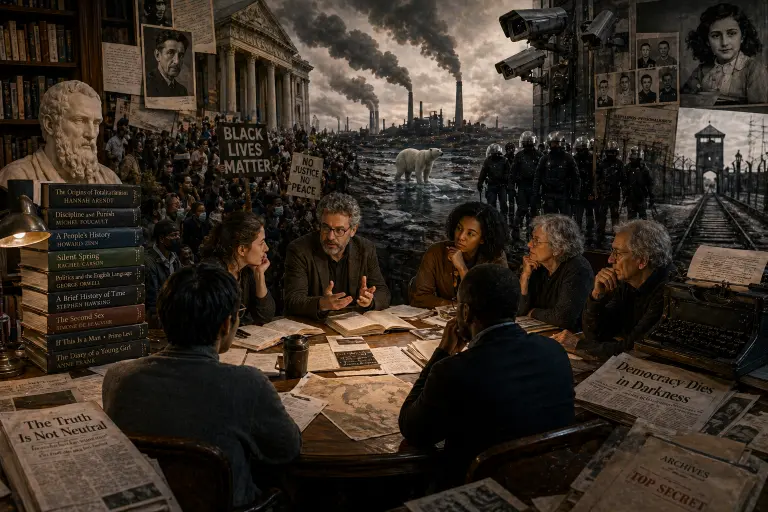
Frameworks of Influence: How Landmark Non-Fiction Reshapes Public Thought
Some books do not simply enter public conversation—they reorganize it. A serious work of non-fiction can alter how a generation understands history, power, memory, science, or moral responsibility. These books exceed bestseller lists and temporary relevance because they become reference points: texts people return to when trying to explain crises, institutions, and the invisible structures beneath ordinary life. Their influence is rarely immediate spectacle. It is slower, deeper, and often more durable than fiction’s emotional immediacy.
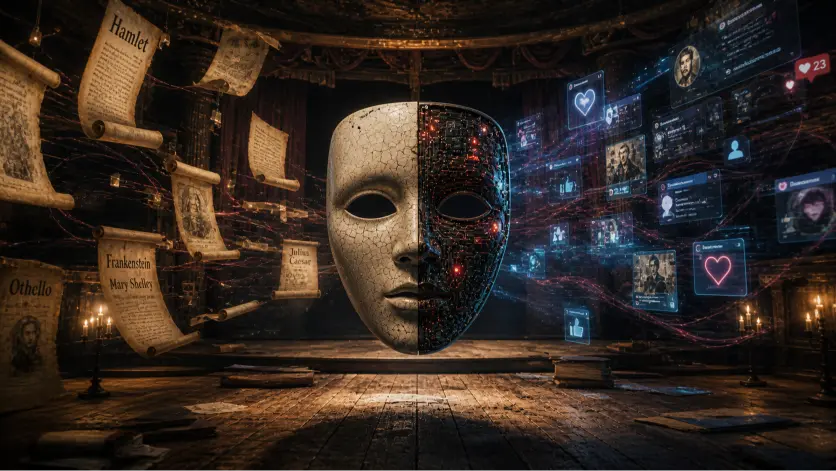
The Persistence of Structure: Classics as Maps for Modern Systems
The enduring relevance of classical literature lies not in its distance from modern life, but in its unsettling proximity to it. Beneath the differences of language, setting, and form, many canonical works operate as early models of systems that continue to structure contemporary experience. Desire, attention, persuasion, and fear—these are not new phenomena. What changes is their medium. The logic that once governed drawing rooms, public squares, and gothic castles now reappears in digital interfaces, algorithmic feeds, and technological anxieties.