

Language rarely operates only through explicit meaning. The most sophisticated forms of writing influence readers beneath conscious awareness, shaping emotional atmosphere, memory retention, sensory immersion, and persuasion through patterns that often remain invisible during the act of reading itself. Words do not merely communicate ideas; they construct psychological environments.
Great literature therefore depends not only on narrative or character, but on microstructures of language capable of guiding perception with extraordinary precision. Repetition, inversion, sensory fusion, and rhetorical concealment become instruments through which writers manipulate attention and emotion without overtly announcing their presence.
To study these techniques is to uncover the hidden engineering beneath persuasive and immersive communication.

The Ecology of Keywords: The Power of Isotopy
One of literature’s most subtle techniques operates through semantic repetition. Authors repeatedly distribute words belonging to the same conceptual field throughout a text, gradually constructing an emotional climate that shapes perception almost invisibly.
This mechanism is known as isotopy.
Rather than relying on explicit description, isotopy creates coherence through recurring semantic associations. A wealthy industrialist may never be directly called “emotionally cold,” yet the narrative surrounding them repeatedly invokes metallic textures, rigid geometry, sterile surfaces, frozen landscapes, or mechanical sounds.
The result is cumulative psychological conditioning. Each individual word appears insignificant in isolation, but together they construct an immersive atmosphere that becomes nearly impossible to escape.
Importantly, isotopy functions beneath conscious attention because readers process semantic patterns holistically rather than analytically during immersion. The emotional climate emerges gradually through repetition without requiring overt explanation.
Great authors therefore understand that atmosphere is often lexical before it becomes narrative.
This semantic ecology explains why certain fictional worlds feel internally coherent even when readers struggle to identify exactly why. The vocabulary itself continuously reinforces thematic identity.
The same principle possesses enormous relevance in branding, communication, and professional identity construction. Organizations frequently focus on visual branding while neglecting semantic consistency. Yet language shapes perception as powerfully as design.
A luxury brand, for example, may unconsciously reinforce sophistication through recurring lexical fields associated with precision, rarity, silence, craftsmanship, depth, and permanence. A technology company may repeatedly invoke speed, fluidity, disruption, connection, or intelligence.
When vocabulary remains semantically aligned, communication develops tonal coherence. Every word reinforces the same psychological environment.
Strong messaging therefore depends not only on what is said, but on the semantic ecosystem surrounding every statement.
Chiasmus and Logical Inversion: The Elegance of Persuasion
Certain phrases feel unforgettable not because of their ideas alone, but because their structure produces a sensation of perfect balance. One of rhetoric’s most enduring devices achieves this effect through inversion.
Chiasmus organizes language into a mirrored structure commonly described as A-B-B-A. Terms introduced in one order return inverted, creating symmetry, rhythm, and closure simultaneously.
The classic example remains John F. Kennedy’s famous formulation: “Ask not what your country can do for you—ask what you can do for your country.”
The persuasive force of this sentence extends beyond patriotism. Structurally, the inversion creates cognitive satisfaction. The mirrored arrangement generates the impression of inevitability, as though the statement possesses internal completeness.
Human cognition responds strongly to symmetry because balanced structures are easier to process, remember, and repeat. Chiasmus transforms argument into architecture.
Importantly, the technique also creates rhetorical authority. A structurally elegant phrase often appears wiser than a semantically equivalent but poorly organized alternative. The mind unconsciously associates formal balance with conceptual depth.
This explains why political speeches, philosophical aphorisms, religious texts, and memorable slogans frequently rely on inversion patterns. The structure itself amplifies memorability.
In practical communication, chiasmus becomes a powerful tool for headlines, presentations, negotiation summaries, and brand positioning. A carefully inverted phrase condenses complex ideas into emotionally durable language.
However, sophisticated rhetoric requires moderation. Excessive symmetry can appear artificial or manipulative. The power of inversion depends precisely on its strategic rarity.
The most effective persuasive language therefore balances structural elegance with conversational naturalness.

Literary Synesthesia: Crossing the Senses for Total Immersion
Most descriptions remain confined within ordinary sensory categories. Sounds are heard. Colors are seen. Textures are touched. Yet some literary works deliberately violate these boundaries through synesthetic imagery.
A scream becomes “dark.” A perfume becomes “sharp.” A silence feels “heavy.”
These expressions initially appear irrational because they fuse incompatible sensory domains. Yet precisely through this violation, they produce unusually vivid psychological effects.
Literary synesthesia forces the brain to construct new neural associations. Instead of processing sensation conventionally, cognition becomes creatively destabilized. The reader experiences perception itself as intensified.
Importantly, synesthetic language frequently succeeds because emotional experience already operates across sensory boundaries internally. Fear may feel cold. Grief may feel heavy. Excitement may appear bright.
Literature externalizes these hidden cognitive crossings through metaphorical language.
The result is increased immersion. Readers do not merely understand a description intellectually; they experience it bodily and emotionally.
This technique possesses extraordinary value in storytelling, luxury marketing, gastronomy, hospitality, and product communication. Experiences become memorable when they transcend literal description.
A restaurant that describes a dessert as “velvet-dark with a slow golden warmth” activates imagination far more effectively than one listing only ingredients. A perfume described as “smoky silk and winter cedar” creates emotional texture beyond chemistry.
Synesthetic language transforms products into sensory narratives.
The technique therefore demonstrates an essential principle of persuasive communication: people rarely desire objects purely rationally. They desire experiences capable of altering emotional perception.
Paralipsis: The Art of Saying by Pretending Not to Say
Among rhetoric’s most psychologically sophisticated techniques is paralipsis: drawing attention to something precisely by claiming one will avoid mentioning it.
Phrases such as “I will not even discuss the financial disaster caused by…” or “Not to mention his repeated failures…” function through strategic contradiction. The speaker simultaneously denies and performs the act of emphasis.
This maneuver grants rhetorical flexibility. The idea enters the audience’s awareness while the speaker preserves plausible distance from direct accusation.
Paralipsis therefore operates as controlled implication.
The technique appears frequently in political discourse, diplomacy, courtroom rhetoric, journalism, and sophisticated conversation because it allows sensitive information to circulate indirectly.
Importantly, paralipsis exploits a psychological paradox: prohibition often increases attention. By announcing an intention not to mention something, the speaker activates the audience’s curiosity and directs focus toward the supposedly excluded topic.
The rhetorical power lies precisely in this tension between concealment and revelation.
In negotiation and professional environments, paralipsis can function as a form of strategic subtlety. Difficult issues may be introduced without overt confrontation, allowing conversations to preserve social equilibrium while still acknowledging sensitive realities.
However, the technique also carries ethical complexity. Paralipsis can easily become manipulative when used to spread insinuation without accountability.
Its sophistication therefore depends on intention and restraint. Used carefully, it enables diplomatic precision. Used recklessly, it becomes rhetorical evasion.
The broader lesson is significant: communication often derives power not only from explicit statements, but from what language strategically frames as absent, avoided, or unsaid.
Language as Psychological Architecture
Across isotopy, chiasmus, synesthesia, and paralipsis, a common principle emerges: language shapes cognition structurally before meaning becomes fully conscious.
Semantic repetition creates atmosphere. Inversion creates memorability. Sensory crossing creates immersion. Strategic omission creates implication.
Readers therefore experience rhetoric not merely as information, but as architecture operating within attention, memory, and emotion.
This explains why sophisticated communication often feels persuasive before audiences can fully explain why.
The structure of language itself becomes part of the argument.
Why These Literary Techniques Matter Beyond Fiction
Although these devices emerge from literary and rhetorical traditions, their practical relevance extends far beyond books. Modern communication environments depend increasingly on emotional resonance, memorability, and psychological precision.
Brand identity, leadership communication, public speaking, negotiation, storytelling, and digital media all rely on subtle linguistic engineering.
Understanding isotopy improves tonal consistency. Understanding chiasmus improves memorability. Understanding synesthesia enhances sensory storytelling. Understanding paralipsis sharpens diplomatic communication.
Literature therefore functions as an advanced laboratory for studying how language influences perception.
Institutions such as the British Library, the Library of Congress, and academic archives like JSTOR offer extensive resources on rhetoric, semantics, stylistics, and literary linguistics.
Continue Exploring the Mechanics of Language
If you are interested in how literary language shapes emotion and persuasion, you may also explore our essays on symbolic imagery, narrative voice, metaphorical systems, and rhetorical architecture.
Readers seeking deeper analytical engagement may revisit our long-form studies on semantic fields, stylistic coherence, and psychological immersion in fiction.
Frequently Asked Questions
What is isotopy in literature?
It is the repetition of semantically related words throughout a text to create thematic coherence and psychological atmosphere.
Why is chiasmus so memorable?
Because mirrored structural patterns create cognitive balance, making phrases easier to process, retain, and repeat.
What does literary synesthesia achieve?
It intensifies immersion by crossing sensory categories and forcing readers to experience perception more vividly.
Why is paralipsis rhetorically powerful?
Because it introduces ideas indirectly while preserving plausible deniability and increasing audience attention through implied omission.
Reviewed for editorial quality, analytical depth, and rhetorical precision.
Conclusion: The Invisible Mechanics of Persuasive Language
Language does not influence readers solely through direct meaning. It shapes atmosphere through repetition, authority through symmetry, immersion through sensory disruption, and implication through strategic concealment.
The most sophisticated literary techniques often operate invisibly, guiding perception before analysis becomes conscious.
To study these mechanisms is therefore to recognize that communication itself possesses architecture. Every carefully selected word contributes to an emotional ecosystem. Every structural inversion reshapes memory. Every omission redirects attention.
In that recognition, literature reveals one of its deepest lessons: words are never merely vehicles of thought. They are instruments for shaping how reality is emotionally experienced.

Bibliographic Foundation
This analysis was conducted under the Sanctum's methodological rigor, utilizing exegetical protocols grounded in universal heritage repositories and documented preservation archives.
View Authority FoundationsAnalytical Recommendations
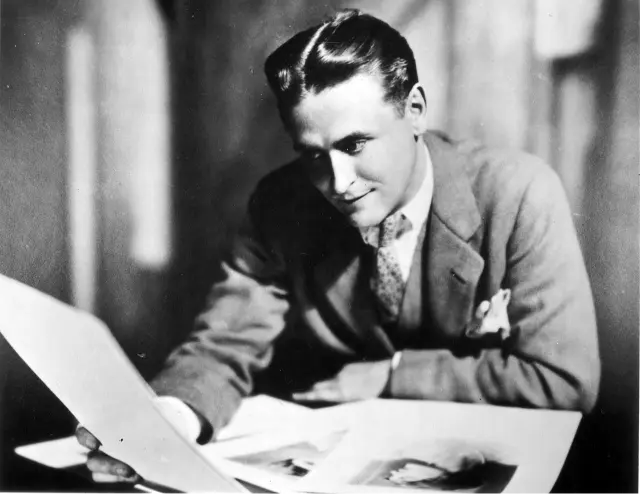
The Great Gatsby: Desire, Illusion, and the Fragile Architecture of the American Dream
Few novels have captured the moral texture of an era with the quiet precision of The Great Gatsby. Often remembered for its glittering parties, tragic romance, and iconic imagery, the novel resists reduction to a story of excess alone. Beneath its surface elegance lies a rigorous examination of desire—how it is shaped by illusion, sustained by fantasy, and ultimately undone by the collision between imagined futures and stubborn realities.
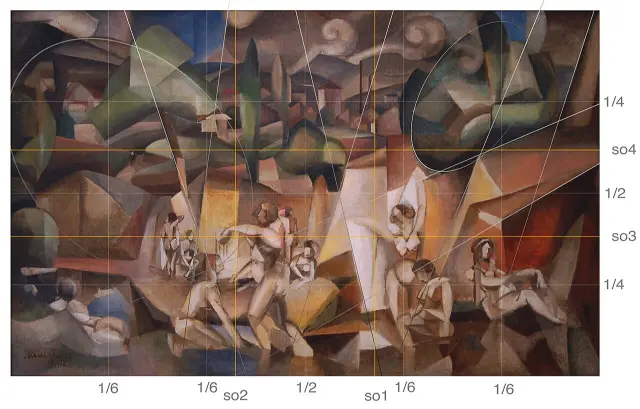
Modernism and the Wreckage of Certainty: Literature in the Age of Fractured Time
Modernism and the Wreckage of Certainty: Literature in the Age of Fractured Time. Literary modernism did not arise as a stylistic fashion. It emerged as a philosophical rupture. The early twentieth century confronted writers with a world whose inherited frameworks of meaning had begun to fail under the pressure of unprecedented historical shocks. Industrial acceleration, mechanized warfare, the collapse of empires, and the erosion of religious and social certainties produced not merely political instability, but epistemic disorientation.

The Architecture of Awareness: Narrative Voice as a System of Control
Narrative voice is not simply a matter of who speaks—it is a system that regulates time, perception, and authority. Through subtle shifts in perspective, distance, and access to consciousness, the narrator determines not only what is told, but how reality itself is experienced. Whether a story feels predetermined or open-ended, stable or unstable, coherent or fragmented, depends less on plot than on the architecture of voice that frames it.