
The contemporary novel no longer asks only what stories should be told—it asks what form can still contain modern consciousness. In an age shaped by digital exposure, ecological dread, fractured identity, migration, and the collapse of stable public narratives, fiction has been forced to renegotiate its own architecture. The result is not a single literary movement, but a series of formal tensions: between confession and invention, intimacy and performance, realism and surrealism, memory and algorithm, national history and displaced belonging.
What distinguishes the strongest contemporary fiction is not topical relevance alone, but its willingness to challenge inherited narrative assumptions. The traditional European novel—linear, psychologically centered, structurally stable, often grounded in bourgeois realism—no longer feels sufficient for many writers attempting to represent the present. Instead, contemporary literature experiments with instability itself. Fragmentation becomes form. Silence becomes testimony. The self becomes suspect. Nature becomes hostile. The novel stops pretending coherence and begins reflecting the unstable systems readers already inhabit.
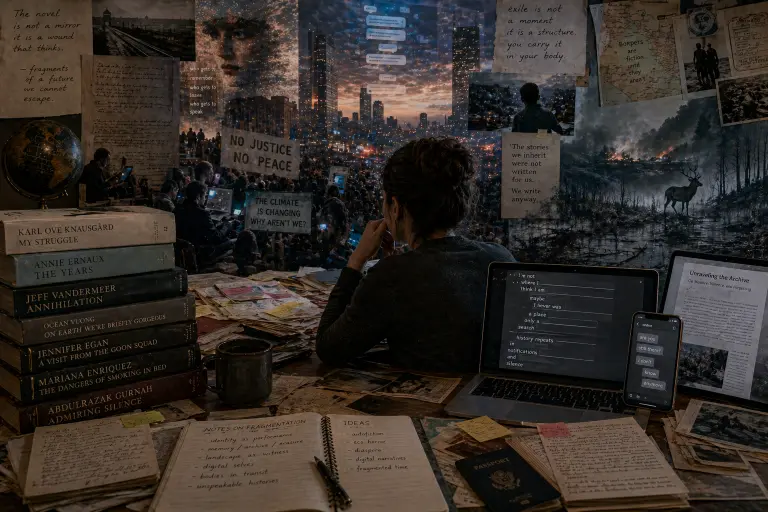
Autofiction and the Collapse of the Stable Self
Few developments have reshaped contemporary fiction more radically than autofiction. Its importance lies not in simple autobiographical resemblance, but in its refusal to preserve the boundary between author and narrator as a stable ethical line. The reader is left inside productive uncertainty: what is being confessed, what is being performed, and whether that distinction still matters.
Karl Ove Knausgård’s My Struggle transformed this conversation by treating ordinary life with the gravity once reserved for epic narrative. Domestic boredom, paternal resentment, humiliation, and emotional repetition became not background but structure. The radical gesture was not revelation alone—it was scale. By refusing to dramatize life into conventional plot, Knausgård forced readers to confront whether authenticity itself could function as literary tension.
Annie Ernaux, awarded the Nobel Prize in Literature, pushes this logic further through radical compression. Works such as The Years and Simple Passion dissolve the individual self into social memory, class consciousness, gendered experience, and historical time. Her writing refuses the romantic myth of singular identity. The “I” becomes collective evidence.
This hunger for raw vulnerability reflects something larger than literary fashion. In the age of social media, readers are surrounded by constant self-performance. Curated intimacy dominates public life. Autofiction responds by asking whether sincerity is still possible when confession itself has become a cultural genre. Readers no longer seek fantasy alone—they seek the unstable territory between exposure and invention.
The New Gothic and the Rise of Eco-Horror
Contemporary fear has changed its vocabulary. Classical Gothic fiction feared haunted houses, family curses, and supernatural intrusion. Modern horror increasingly fears systems: ecological collapse, urban decay, contamination, and the slow realization that the environment itself has become unreadable. Nature is no longer passive setting—it is witness, memory, and sometimes revenge.
Jeff VanderMeer’s Annihilation captures this shift with extraordinary precision. Area X is terrifying not because it contains monsters, but because it refuses human categories altogether. Language fails inside it. Biology mutates beyond explanation. The horror emerges from epistemological collapse: the realization that nature may not be interpretable through human logic at all.
Mariana Enriquez, particularly in works like The Dangers of Smoking in Bed and Our Share of Night, combines political violence, urban horror, and inherited trauma with supernatural atmosphere. The city itself becomes haunted by dictatorship, class violence, and invisible historical residue. Horror is social before it is spectral.
This evolution matters because it reveals how fear has migrated. Contemporary readers are less haunted by ghosts than by infrastructure failure, climate anxiety, poisoned landscapes, and institutional indifference. Eco-horror transforms genre fiction into environmental criticism by making collapse emotionally legible before it becomes statistically undeniable.
Literary archives and institutions such as the British Library, the Library of Congress, and international literary records preserved through JSTOR continue to document how contemporary fiction responds to ecological crisis, digital fragmentation, and the transformation of narrative form across global literary traditions.
Diaspora Voices and the Rewriting of Literary History
One of the most significant shifts in the last decade has been the center of literary authority moving outward. Writers from geographies once treated as peripheral to the Western canon are no longer entering the conversation as exceptions—they are forcing the conversation itself to be rewritten.
Abdulrazak Gurnah’s Nobel Prize recognition brought overdue attention to fiction shaped by colonial displacement, migration, and the violence of historical forgetting. His novels resist dramatic spectacle and instead expose the slow bureaucratic cruelty of exile—the paperwork, silence, and emotional dislocation that define displacement long after visible conflict ends.
Ocean Vuong’s On Earth We’re Briefly Gorgeous similarly refuses inherited narrative expectation. It moves through memory, migration, sexuality, family violence, and inherited silence through poetic fragmentation rather than classical realism. The structure itself resists assimilation into familiar Western forms of coherence.
This is not only representation politics. These works force the canon to confront its own formal assumptions. Linear inheritance, stable identity, and singular national belonging are no longer sufficient narrative models. Diaspora fiction demands that literature accept discontinuity as structure rather than defect.
The Western canon is not expanding politely—it is being revised under pressure.
The Internet and the Fragmented Architecture of the Novel
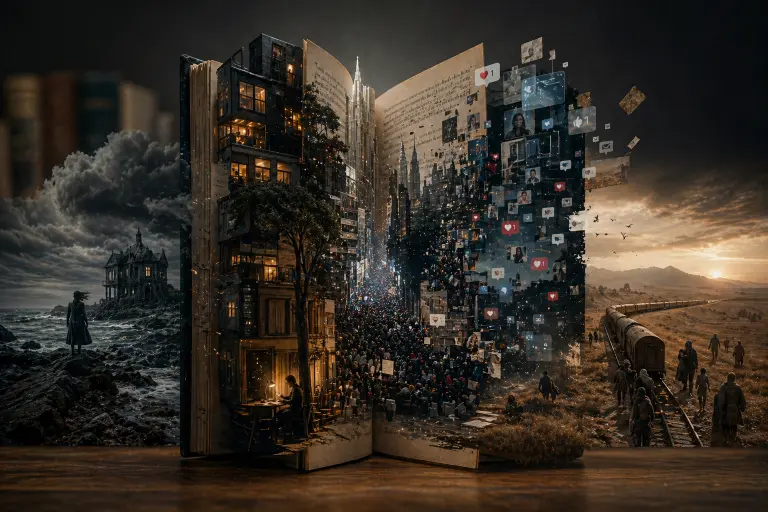
The internet did not simply change what writers discuss—it changed how narrative feels. Attention is now shaped by scrolling, interruption, simultaneous windows, message notifications, and permanent informational overflow. The contemporary novel has had to decide whether to resist this condition or formally absorb it.
Jennifer Egan’s A Visit from the Goon Squad and later works demonstrated how fragmentation could become narrative logic rather than stylistic ornament. PowerPoint chapters, discontinuous timelines, and fractured perspective reflect not aesthetic experimentation for its own sake, but a world in which continuity itself feels artificial.
Patricia Lockwood’s No One Is Talking About This goes further by making internet consciousness inseparable from emotional structure. The novel mimics the speed, absurdity, intimacy, and violence of online life, where irony and grief coexist without transition. The form performs the cognitive experience it describes.
This raises an important question: is literature adapting to our digital brains, or preserving the last refuge of deep, linear attention? The answer may be both. Some novels mimic fragmentation because honesty demands it. Others resist it because sustained reading remains one of the few surviving practices of unbroken thought.
The contemporary novel is negotiating not only content, but cognition itself.
Why This Moment Matters
These transformations are not temporary literary trends. They reflect deeper cultural changes in how people understand identity, memory, authority, and fear. The self is less stable, history less singular, institutions less trusted, and the future less guaranteed. Fiction responds by abandoning the illusion of narrative certainty.
This does not mean contemporary novels are more chaotic than earlier literature. It means they are often more honest about instability. They refuse inherited forms when those forms no longer describe lived experience with enough precision.
Readers sometimes interpret this as difficulty. More accurately, it is fidelity to complexity.
Continue Exploring Contemporary Fiction
If you are interested in how modern novels reshape literary form, you may also explore our essays on structural critique, worldbuilding, and the relationship between digital consciousness and narrative architecture across contemporary fiction.
Readers drawn to broader literary movements may also revisit our long-form studies of autofiction, symbolic fragmentation, and the reinvention of realism in twenty-first-century literature.
Frequently Asked Questions
Why has autofiction become so influential in recent literature?
Because readers increasingly distrust polished fictional distance and seek emotional vulnerability, ambiguity, and the unstable boundary between confession and performance.
What makes eco-horror different from traditional Gothic fiction?
Eco-horror shifts fear from ghosts and haunted houses toward environmental collapse, urban decay, and the realization that nature itself may become hostile or unreadable.
How are diaspora writers changing the literary canon?
They challenge Western assumptions about structure, identity, and historical legitimacy by introducing narrative forms shaped by migration, exile, multilingual experience, and fragmented belonging.
Has the internet changed how novels are written?
Yes. Many contemporary novels now incorporate fragmentation, digital communication, and interrupted attention as formal elements, reflecting how modern consciousness is shaped by online life.
Reviewed for editorial quality, literary relevance, and structural integrity.
Conclusion: Fiction After Stability
The contemporary novel survives because it stopped defending stability as a literary ideal. Instead of pretending that identity is coherent, history is complete, or attention is uninterrupted, it writes directly from fracture. Autofiction questions sincerity, eco-horror transforms landscape into accusation, diaspora fiction rewrites legitimacy, and digital form reshapes narrative time itself.
These are not separate trends, but variations of the same pressure: the need to invent forms capable of representing a world where certainty has become structurally unreliable. The novel remains powerful not because it preserves old order, but because it continues adapting faster than cultural exhaustion can predict.
Its future may look fragmented, unstable, and formally restless. That is not decline. It is realism finding a new language.

Bibliographic Foundation
This analysis was conducted under the Sanctum's methodological rigor, utilizing exegetical protocols grounded in universal heritage repositories and documented preservation archives.
View Authority FoundationsAnalytical Recommendations
Realism and the Discipline of the Ordinary: Literature in the Age of Social Visibility
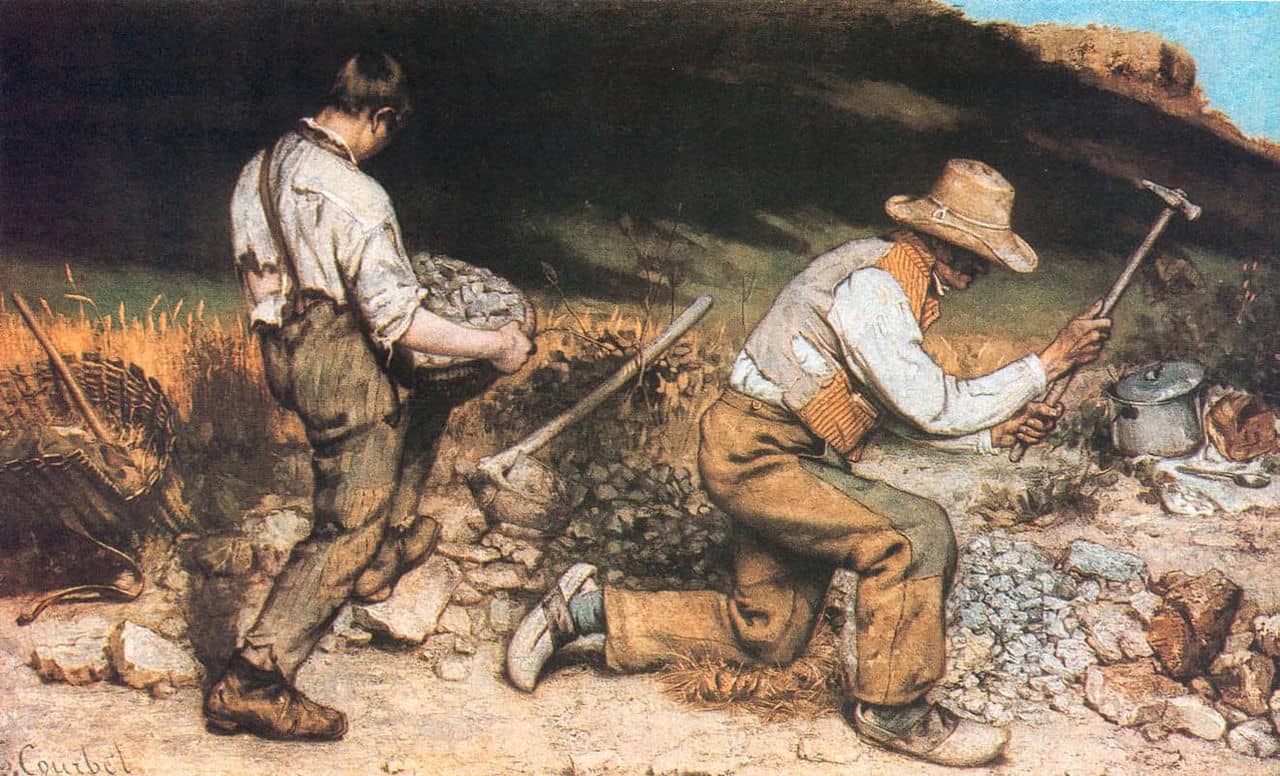
Realism and the Discipline of the Ordinary: Literature in the Age of Social Visibility. If Romanticism elevated the inner world and imagination as a response to mechanized reality, Realism emerges as a corrective movement—one that redirects attention outward, toward the material, social, and economic conditions shaping human existence. Far from a rejection of depth, Realism represents a reorientation of it. It insists that meaning is not found only in transcendence or subjective intensity, but in the structures of everyday life: work, class, institutions, and the quiet pressures of social expectation.

The Chronicles of Narnia: A Literary Architecture of Meaning, Myth, and Moral Imagination
Few works of twentieth-century literature have achieved the rare balance of popular enchantment and intellectual endurance quite like The Chronicles of Narnia.

Contemporary Fiction and the Inheritance of Fragmentation: Narrative After Modernism
Few works of twentieth-century literature have achieved the rare balance of popular enchantment and intellectual endurance quite like The Chronicles of Narnia.