

Narrative voice is often approached as a literary device—an artistic decision that shapes how a story is told. Yet its implications extend far beyond the page. The way a voice constructs reality, withholds information, or invites identification mirrors the mechanisms through which we interpret the world itself. In this sense, reading is not only an aesthetic experience; it is a cognitive exercise. It trains perception, refines judgment, and expands the boundaries of empathy.
Across contemporary thought, five interrelated dimensions reveal how narrative voice operates as both a literary strategy and a practical tool: the cultivation of empathy through perspective, the detection of unreliable discourse, the shift from authority to vulnerability, the mechanics of psychological manipulation, and the emergence of multiperspectivism as a model of truth. Together, they suggest that to read attentively is to think more critically—and to live more perceptively.
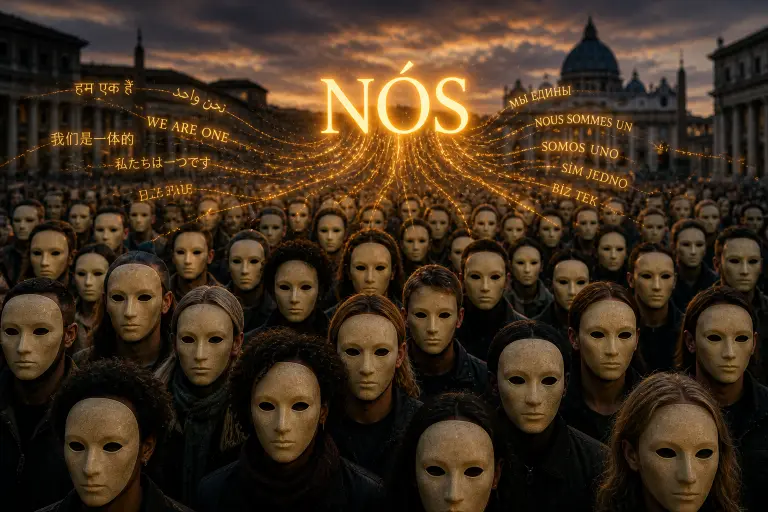
Empathic Listening Through the Voice of the Other
One of the most profound capacities of literature lies in its ability to displace the reader from their own perspective. First-person narratives, particularly those rooted in unfamiliar cultural, social, or historical contexts, invite the reader into a form of cognitive migration. The self becomes provisional, temporarily inhabited by another voice.
Research in narrative cognition and neuroscience suggests that such engagement activates networks associated with empathy, perspective-taking, and emotional simulation. While the literary experience cannot be reduced to neural processes, it is clear that sustained exposure to diverse narrative voices expands the range of experiences the mind can process and understand.
This has practical implications. Reading across difference is not merely an act of cultural consumption—it is a form of training. It refines the ability to interpret unfamiliar behaviors, reduces reliance on simplistic assumptions, and fosters a more flexible understanding of human experience.
In this sense, literature becomes a form of “curated alterity.” It provides structured encounters with perspectives that might otherwise remain inaccessible, offering a controlled environment in which empathy can be developed and tested.
Media Literacy and the Detection of Unreliable Voices
The techniques that define unreliable narration in fiction—omission, distortion, selective emphasis—have clear parallels in contemporary information environments. Not all narratives encountered in daily life are transparent or complete. Many are constructed to guide interpretation in specific directions.
Literary analysis provides tools for navigating this complexity. To read critically is to ask not only what is being said, but what is being excluded. Gaps in a narrative are rarely neutral. They shape perception by limiting what can be known.
This awareness transforms reading into a form of defense. By recognizing patterns of omission and framing, the reader becomes better equipped to evaluate information in broader contexts. The skills developed through literature—attention to voice, sensitivity to bias, awareness of structure—extend beyond the page into everyday interpretation.
Resources such as the British Library, the Library of Congress, and academic repositories like JSTOR continue to support research into narrative form, cognition, and interpretation, providing insight into how literary techniques inform broader modes of critical thinking.
Authority and Vulnerability in Narrative Voice
The history of literature reflects a shift in how authority is constructed. Classical narratives often relied on omniscient voices—stable, authoritative, and confident in their interpretations. These voices offered coherence and certainty.
Contemporary narratives increasingly move in the opposite direction. They privilege vulnerability over authority, presenting narrators who are partial, uncertain, and self-aware of their limitations. This shift reflects broader cultural dynamics, including skepticism toward institutional authority and a desire for more authentic forms of connection.
Vulnerability in narrative does not imply weakness. It creates intimacy. A voice that acknowledges its own limitations invites trust not through certainty, but through transparency. The reader engages not with a perfected perspective, but with a human one.
This has practical resonance beyond literature. In communication, whether personal or professional, the appearance of absolute certainty can create distance. Vulnerability, by contrast, can foster connection by signaling openness and relatability.
Narrative Gaslighting and the Instability of Perception
Some narratives go further, actively destabilizing the reader’s sense of reality. Through controlled perspective, selective disclosure, and contradictory evidence, they create a condition in which the reader begins to doubt their own interpretation.
This technique, often associated with works such as The Girl on the Train or Dom Casmurro, can be understood as a form of narrative “gaslighting.” The text presents information in ways that undermine certainty, forcing the reader to question not only the narrator, but their own assumptions.
While this operates as a literary strategy, it also reflects real-world dynamics of manipulation. Understanding how a narrative constructs doubt—how it withholds, reframes, or distorts information—can sharpen awareness of similar patterns in interpersonal contexts.
The reader learns to recognize when perception is being guided rather than simply informed. This awareness has implications for identifying psychological manipulation, where reality is subtly redefined to serve particular interests.

Multiperspectivism and the Mosaic of Truth
If unreliable narration destabilizes certainty, multiperspectivism offers an alternative model of understanding. Instead of presenting a single authoritative account, the narrative distributes perspective across multiple voices, each offering a partial view of the same event.
This structure, often associated with the “Rashomon effect,” reveals that truth is not fixed but relational. Each perspective is shaped by position, experience, and limitation. No single account is sufficient, yet together they form a more complex and nuanced understanding.
In literary terms, this creates a layered narrative in which meaning emerges from comparison. The reader must hold multiple interpretations simultaneously, recognizing both their contradictions and their intersections.
Beyond literature, this model has practical relevance. In complex situations—whether interpersonal, professional, or social—conflicts rarely arise from a single falsehood. They emerge from competing perspectives, each containing elements of validity. Understanding this can shift the focus from determining who is right to understanding how different views relate to one another.
Why These Skills Extend Beyond Literature
The techniques explored here—empathic perspective-taking, detection of unreliable discourse, recognition of vulnerability, awareness of manipulation, and integration of multiple viewpoints—form a coherent set of cognitive skills. Literature provides a structured environment in which these skills can be developed without immediate real-world consequences.
Reading becomes a form of rehearsal. It allows the mind to practice navigating complexity, ambiguity, and contradiction. The lessons are not abstract—they translate into more attentive listening, more careful interpretation, and more flexible thinking.
In a world shaped by information overload and competing narratives, these capacities are increasingly essential.
Continue Exploring Narrative Voice
If you are interested in how narrative techniques shape perception, you may also explore our essays on unreliable narration, collective voice, and structural critique.
Readers drawn to deeper analysis may also revisit our long-form studies of cognitive reading, narrative ethics, and the relationship between literature and critical thinking.
Frequently Asked Questions
Can reading really improve empathy?
Research suggests that engaging with diverse perspectives in narrative form can enhance the ability to understand and interpret others’ experiences.
What is an unreliable narrator?
A narrative voice that presents a distorted or incomplete version of events, requiring the reader to interpret beyond what is stated.
Why are modern narratives more focused on vulnerability?
Because contemporary audiences often value authenticity and complexity over authoritative certainty.
What is multiperspectivism?
A narrative approach that presents multiple viewpoints on the same event, emphasizing the relational nature of truth.
Reviewed for editorial quality, analytical rigor, and practical relevance.
Conclusion: Reading as Cognitive Practice
To engage deeply with narrative voice is to develop a set of skills that extend beyond literature. It is to learn how to listen, how to question, and how to interpret with precision. Each technique examined here reflects a broader capacity: to move beyond the limits of a single perspective and to navigate complexity without reducing it.
In this sense, literature functions not only as art, but as practice. It trains the mind to inhabit other realities, to detect distortion, to value vulnerability, and to integrate multiple viewpoints into a more comprehensive understanding.
What begins as reading becomes a way of thinking—one that remains active long after the page has been turned.

Bibliographic Foundation
This analysis was conducted under the Sanctum's methodological rigor, utilizing exegetical protocols grounded in universal heritage repositories and documented preservation archives.
View Authority FoundationsAnalytical Recommendations

The Little Prince: A Philosophy of Tenderness, Responsibility, and the Tragedy of Growing Up
Few works of modern literature occupy such a paradoxical space in cultural memory as The Little Prince. It is frequently categorized as a children’s tale, gifted to young readers with the assumption of simplicity, yet it is quietly revered by adults as a meditation on loss, love, and moral perception.

Modernism and the Wreckage of Certainty: Literature in the Age of Fractured Time
Modernism and the Wreckage of Certainty: Literature in the Age of Fractured Time. Literary modernism did not arise as a stylistic fashion. It emerged as a philosophical rupture. The early twentieth century confronted writers with a world whose inherited frameworks of meaning had begun to fail under the pressure of unprecedented historical shocks. Industrial acceleration, mechanized warfare, the collapse of empires, and the erosion of religious and social certainties produced not merely political instability, but epistemic disorientation.

The Architecture of Authority: Evaluating Depth in Serious Non-Fiction
Serious non-fiction asks more of the reader than agreement. It does not simply present information, nor does it exist merely to confirm what its audience already suspects to be true. At its strongest, research-based non-fiction creates a disciplined encounter with complexity: it organizes evidence, tests assumptions, challenges inherited narratives, and demands intellectual patience. Whether the subject is history, politics, science, philosophy, economics, or cultural criticism, the work succeeds not because it is persuasive in tone, but because it earns authority through structure, method, and precision.