

Language is not only visual or semantic—it is acoustic. Even in silent reading, the mind reconstructs sound, simulating rhythm, tone, and texture internally. This auditory dimension operates beneath conscious awareness, shaping how a text feels in the body before it is fully processed by the intellect. The arrangement of consonants, the structure of sentences, the animation of objects, and the cadence of conjunctions all contribute to an experience that is as physical as it is interpretive.
To engage with literature at this level is to recognize that meaning is inseparable from sensation. Words do not merely signify; they resonate, accumulate, and exert pressure on perception through their sonic and structural properties.

Sound Symbolism: Alliteration and the Texture of Feeling
The repetition of consonant sounds—particularly in alliteration—creates patterns that extend beyond linguistic clarity into sensory experience. Certain phonetic clusters carry distinct tactile qualities. Plosive consonants such as P, B, and T produce abrupt, percussive effects. They interrupt the flow of reading, introducing a rhythm associated with impact, tension, or aggression.
In contrast, sibilant sounds—S, Z, and X—generate continuity. They elongate the sonic line, producing a sense of smoothness, whisper, or latent threat. The reader does not merely recognize these sounds; they are felt as subtle vibrations within the act of reading.
Writers such as Edgar Allan Poe employ these techniques with precision, constructing passages where sound and meaning reinforce one another. The result is a form of induction: the reader is drawn into a particular emotional state not only through imagery, but through the acoustic properties of the language itself.
This principle extends into applied communication. The selection of words based on sound can reinforce tone, creating alignment between message and sensation. Language becomes not only descriptive, but performative.
Parataxis and Hypotaxis: Structuring Thought
Sentence construction determines how information is organized and processed. Parataxis—characterized by short, independent clauses—produces a sequence of discrete units. Each statement stands on its own, creating a rhythm of immediacy and clarity. The effect is often associated with action, objectivity, or psychological fragmentation.
Hypotaxis, by contrast, introduces hierarchy. Subordinate clauses embed information within a layered structure, requiring the reader to hold multiple elements in relation simultaneously. This produces a slower, more reflective mode of engagement, often associated with analytical depth or intellectual control.
The distinction between these forms is not merely stylistic. It reflects different modes of thinking. Parataxis prioritizes sequence; hypotaxis prioritizes relationship. One moves forward; the other expands inward.
For writers, this offers a strategic choice. The structure of a sentence can be aligned with the intended effect—urgency or complexity, clarity or elaboration. Control of syntax becomes control of cognitive pacing.
Scholarly archives maintained by institutions such as the British Library, the Library of Congress, and research platforms like JSTOR provide extensive examples of how these structures function across literary traditions.
Personification and the Animistic Bias
When inanimate elements are described as possessing intention or emotion, the narrative environment shifts. Objects cease to be passive; they become participants. A “restless wind” or a “watchful city” introduces agency into the setting, altering the distribution of responsibility within the narrative.
This technique, often associated with the “pathetic fallacy,” operates through projection. Human qualities are mapped onto external elements, creating a continuity between internal state and external world. The environment reflects, amplifies, or even anticipates the emotional condition of the characters.
The effect is not purely aesthetic. It influences interpretation. A landscape described as hostile suggests conflict beyond human interaction. A setting that appears complicit or reactive introduces a form of moral atmosphere, where actions resonate within a responsive environment.
In applied contexts, this principle enables abstraction to be rendered as presence. Concepts such as institutions, systems, or challenges can be framed as entities with behavior and intention, making them more accessible and engaging.
Polysyndeton and Asyndeton: The Cadence of Accumulation
The presence or absence of conjunctions within a sequence shapes its temporal experience. Polysyndeton—the repetition of conjunctions such as “and”—extends the sequence. Each element is given weight, contributing to a sense of accumulation that can suggest abundance, exhaustion, or magnitude.
The rhythm slows, not because the content is complex, but because the structure insists on continuation. The reader is carried through each addition, experiencing the buildup as a process rather than a summary.
Asyndeton, by contrast, removes conjunctions, compressing the sequence into rapid succession. The effect is acceleration. Events appear to occur in quick progression, creating a sense of urgency or intensity. The absence of connectors eliminates pause, producing impact through density.
These techniques operate at the level of pacing. They determine whether a sequence unfolds gradually or strikes immediately. The choice between them is not arbitrary; it is aligned with the desired emotional trajectory.
In communication, this translates into control over emphasis. A list can overwhelm through quantity or impress through speed, depending on how it is structured.

From Sound to Structure
Across these elements—sound repetition, sentence hierarchy, environmental animation, and connective rhythm—a unified principle emerges: language operates through pattern. These patterns are not always visible, but they are consistently active, shaping the reader’s experience at multiple levels simultaneously.
The text becomes a system in which acoustic, structural, and conceptual components interact. Meaning is distributed across these interactions, rather than confined to individual words or sentences.
Why This Matters
The techniques examined here extend beyond literary analysis into practical communication. Writing, speaking, and design all rely on similar mechanisms: the calibration of rhythm, the structuring of information, the activation of imagery, and the modulation of pacing.
Understanding these mechanisms enables a more deliberate approach to expression. It allows for the construction of messages that are not only intelligible, but effective—capable of guiding attention, shaping emotion, and influencing interpretation.
Continue Exploring Language Systems
If you are interested in how sound and structure shape meaning, you may also explore our essays on narrative theory, stylistic analysis, and rhetorical design.
Readers seeking further depth may revisit our long-form studies on cognition, language, and the mechanics of storytelling.
Frequently Asked Questions
Do sounds in words really affect perception?
Yes, phonetic patterns influence how language is experienced at a sensory level.
What is the difference between parataxis and hypotaxis?
Parataxis uses independent clauses for clarity and speed, while hypotaxis uses subordinate clauses for complexity and depth.
Why personify objects in writing?
It creates engagement by transforming abstract or static elements into active participants.
How do conjunctions affect pacing?
Their presence or absence determines whether a sequence feels extended or accelerated.
Reviewed for editorial quality, analytical depth, and linguistic precision.
Conclusion: The Audible Architecture of Meaning
Language operates as a layered system in which sound, structure, and imagery converge. To read with attention to these elements is to recognize that meaning is not only constructed through semantics, but through rhythm and form.
This awareness transforms both interpretation and creation. It reveals that every choice—phonetic, syntactic, or structural—contributes to the shaping of experience.
In that recognition, language becomes not only a medium of thought, but a form of design that resonates across the senses.

Bibliographic Foundation
This analysis was conducted under the Sanctum's methodological rigor, utilizing exegetical protocols grounded in universal heritage repositories and documented preservation archives.
View Authority FoundationsAnalytical Recommendations

The Life Behind the Page: Biography as Context, Not Explanation
To read a writer closely is, inevitably, to sense the life behind the work—not as a simple key that unlocks meaning, but as a field of pressures, experiences, and contradictions that shape what becomes possible on the page. A novel, a poem, or an essay does not emerge in isolation. It carries traces of education, exile, relationships, intellectual influences, and historical circumstance. These traces are rarely explicit, yet they persist, forming a subtle dialogue between lived experience and artistic creation.
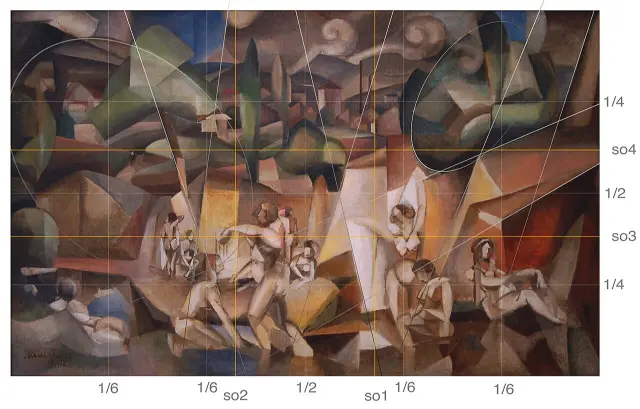
Modernism and the Wreckage of Certainty: Literature in the Age of Fractured Time
Modernism and the Wreckage of Certainty: Literature in the Age of Fractured Time. Literary modernism did not arise as a stylistic fashion. It emerged as a philosophical rupture. The early twentieth century confronted writers with a world whose inherited frameworks of meaning had begun to fail under the pressure of unprecedented historical shocks. Industrial acceleration, mechanized warfare, the collapse of empires, and the erosion of religious and social certainties produced not merely political instability, but epistemic disorientation.

Narrative Voice as Cognitive Practice: Beyond the Aesthetic Experience
Narrative voice is often approached as a literary device—an artistic decision that shapes how a story is told. Yet its implications extend far beyond the page. The way a voice constructs reality, withholds information, or invites identification mirrors the mechanisms through which we interpret the world itself. In this sense, reading is not only an aesthetic experience; it is a cognitive exercise. It trains perception, refines judgment, and expands the boundaries of empathy.