

Few novels have captured the moral texture of an era with the quiet precision of The Great Gatsby. Often remembered for its glittering parties, tragic romance, and iconic imagery, the novel resists reduction to a story of excess alone. Beneath its surface elegance lies a rigorous examination of desire—how it is shaped by illusion, sustained by fantasy, and ultimately undone by the collision between imagined futures and stubborn realities. The book is not merely a portrait of the Jazz Age; it is a meditation on the conditions under which longing becomes self-deception.
At its center, the novel interrogates the architecture of aspiration. Dreams in this world are not neutral hopes; they are carefully curated fictions that promise transcendence through possession. The tragedy of Gatsby is not that he desires too much, but that he mistakes desire for destiny, confusing intensity of feeling with inevitability of fulfillment.
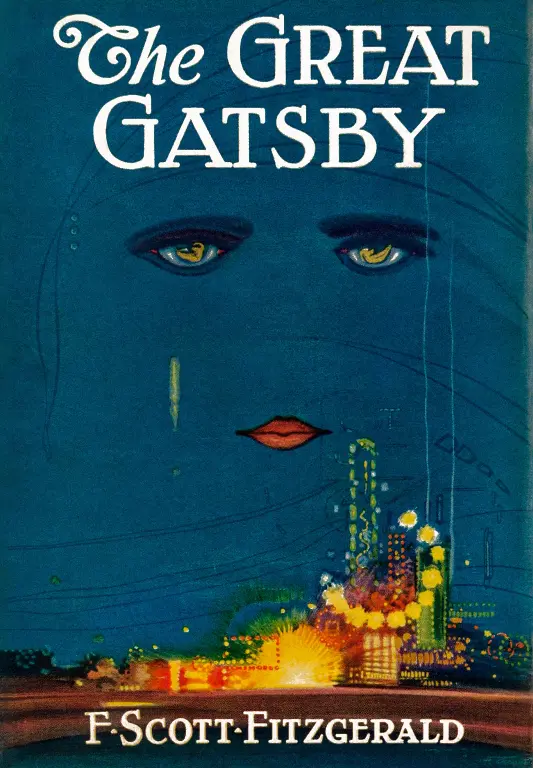
The American Dream as Aesthetic Mirage
The concept commonly labeled the “American Dream” appears in the novel not as an explicit doctrine, but as an atmosphere—an ambient promise that wealth can reconfigure identity. Material abundance is presented as a language through which worth is signaled. Yet this language proves incapable of articulating moral depth. The lavish parties that populate Gatsby’s estate are exercises in spectacle without intimacy. They generate presence without belonging, noise without connection.
This aestheticization of success produces a mirage of fulfillment. Wealth becomes a surface upon which fantasies of self-creation are projected. The tragedy lies in the assumption that accumulation can substitute for recognition. Gatsby’s mansion is not a home; it is a stage set, designed to be seen rather than inhabited. The novel thus exposes the tension between visibility and value. To be admired is not to be known.
The child, by contrast, does not measure worth through productivity or recognition. His questions are not strategic. They are sincere. This sincerity is portrayed not as innocence, but as a form of clarity that adulthood gradually erodes.
Desire as Temporal Distortion
Gatsby’s longing is not directed toward Daisy as she exists, but toward Daisy as she once represented—a figure frozen in memory and polished by imagination. His desire is temporal in nature. It seeks not merely possession, but restoration. The past is treated as a recoverable asset, something that can be purchased back into the present through sufficient display of success.
This distortion of time reveals a deeper philosophical tension: the refusal to accept irreversibility. Gatsby’s tragedy is not romantic excess, but metaphysical denial. He resists the fundamental condition of human existence—that moments cannot be relived, only reinterpreted. In clinging to an idealized past, he forfeits the capacity to engage with the present as it is.
This setting transforms the narrative into a meditation on presence. The novel suggests that nostalgia, when elevated to a guiding principle, becomes a form of self-betrayal. Memory ceases to be a source of meaning and becomes a mechanism of paralysis.
Narrative Distance and Moral Ambiguity
The relationship between the narrator and the subject constitutes the emotional core of the story. The narrative perspective of the novel is marked by restraint. The story is mediated through a voice that observes more than it judges, allowing moral complexity to emerge without overt commentary. This distance does not imply neutrality. Rather, it creates a space in which contradiction can be held without immediate resolution.
Characters are not reduced to villains or heroes. Their moral failures are portrayed as extensions of their social environment rather than isolated defects of character. This refusal of moral simplification lends the narrative a tragic gravity. The reader is invited to recognize not only the flaws of individuals, but the structures that render those flaws predictable.
The result is an ethical landscape shaped less by condemnation than by recognition. The novel’s power lies in its capacity to reveal complicity without collapsing into cynicism.
Wealth, Class, and the Illusion of Mobility
The most frequently analyzed theme—that wealth alone does not grant social belonging—functions as an epistemological claim. Economic mobility does not guarantee cultural acceptance. The barriers between old money and new money persist, encoded in manners, tastes, and unspoken hierarchies. Gatsby’s tragic miscalculation is his belief that economic success can overwrite inherited distinctions.
This tension reveals a central paradox of the social order depicted in the novel: mobility is celebrated as an ideal while being structurally constrained in practice. The promise of openness coexists with the persistence of exclusion. The American Dream, in this sense, is presented as both a motivating fiction and a selective reality.
The tragedy is not merely personal. It reflects a systemic contradiction between the rhetoric of opportunity and the realities of stratification.
The Green Light and the Metaphysics of Hope
The stylistic simplicity of the green light is often mistaken for a mere plot device. In truth, its deeper significance lies in its function as a horizon. The light is not simply something Gatsby wants; it is something he orients himself toward. It structures his sense of possibility.
This orientation reveals the metaphysical dimension of hope. Hope, in the novel, is not presented as a benign force. It is ambivalent. It animates action, but it also sustains illusion. The danger is not in hoping, but in allowing hope to detach from reality. When aspiration becomes insulated from constraint, it drifts into fantasy.
The green light thus marks the boundary between vision and delusion. It glows with promise, but it is always distant, always mediated by water—by separation.
Why The Great Gatsby Endures
The book’s most devastating critique is reserved for aspiration itself. The endurance of The Great Gatsby lies in its ability to articulate a tension that remains unresolved in modern life: the desire for self-invention within structures that quietly resist transformation. The novel does not offer a definitive critique of ambition. It recognizes ambition as a generative force while exposing its susceptibility to distortion.
Readers return to Gatsby not to condemn dreaming, but to confront the fragile line between aspiration and illusion. The story persists because it names a recurring temptation: to believe that intensity of desire can override the limits of time, class, and circumstance.
This unresolved quality is the source of the book’s lasting power. It does not close its argument. It opens a wound of remembrance. Readers return not for narrative comfort, but for ethical disturbance—for the reminder that something essential has been misplaced.
Conclusion: The Elegance of Loss and the Discipline of Disenchantment
The Great Gatsby is not a story about love alone. More accurately, it is a story about misdirected faith. The novel portrays a world in which belief is placed in surfaces—wealth, reputation, spectacle—rather than in reciprocal recognition. Its philosophy is neither abstract nor systematic. It is embodied in the elegance of loss and the quiet work of disenchantment.
In a cultural environment increasingly defined by speed and surface engagement, the book persists as a quiet act of resistance. It asks not for belief, but for attention. Not for admiration, but for presence. And in doing so, it continues to offer something increasingly rare in modern life: a language for the fragility of the human dream.
Analytical Recommendations

The Architecture of Authority: Evaluating Depth in Serious Non-Fiction
Serious non-fiction asks more of the reader than agreement. It does not simply present information, nor does it exist merely to confirm what its audience already suspects to be true. At its strongest, research-based non-fiction creates a disciplined encounter with complexity: it organizes evidence, tests assumptions, challenges inherited narratives, and demands intellectual patience. Whether the subject is history, politics, science, philosophy, economics, or cultural criticism, the work succeeds not because it is persuasive in tone, but because it earns authority through structure, method, and precision.

The Chronicles of Narnia: A Literary Architecture of Meaning, Myth, and Moral Imagination
Few works of twentieth-century literature have achieved the rare balance of popular enchantment and intellectual endurance quite like The Chronicles of Narnia.

Postmodernism and the Collapse of Grand Narratives: Irony, Fragmentation, and the Play of Meaning
Modernism and the Wreckage of Certainty: Literature in the Age of Fractured Time. Literary modernism did not arise as a stylistic fashion. It emerged as a philosophical rupture. The early twentieth century confronted writers with a world whose inherited frameworks of meaning had begun to fail under the pressure of unprecedented historical shocks. Industrial acceleration, mechanized warfare, the collapse of empires, and the erosion of religious and social certainties produced not merely political instability, but epistemic disorientation.