
Literary analysis and narrative theory

Exploring how stories work through structure, meaning, and critical interpretation.

Latest Posts

The Architecture of Conviction: How Rhetoric Engineers Authority

The Architecture of Conviction: How Rhetoric Engineers Authority

Language does not persuade solely through information. It persuades through rhythm, balance, escalation, omission, and certainty. Long before an argument is consciously evaluated, its structure has already begun shaping emotional response. Certain sentences feel authoritative not because they are logically irrefutable, but because their construction creates the sensation of inevitability.

Read More →


The Architecture of Pressure: How Narrative Structure Directs Emotion

The Architecture of Pressure: How Narrative Structure Directs Emotion

Narrative structure is often mistaken for a neutral framework that merely organizes events. In reality, structure functions as a system of pressure. It regulates possibility, directs attention, and determines the psychological rhythm through which a story is experienced. The reader does not simply observe a sequence of actions; they inhabit an architecture of limitation, expansion, anticipation, and confinement designed to shape emotional response.

Read More →
The Architecture of Awareness: Narrative Voice as a System of Control

The Architecture of Awareness: Narrative Voice as a System of Control

Narrative voice is not simply a matter of who speaks—it is a system that regulates time, perception, and authority. Through subtle shifts in perspective, distance, and access to consciousness, the narrator determines not only what is told, but how reality itself is experienced. Whether a story feels predetermined or open-ended, stable or unstable, coherent or fragmented, depends less on plot than on the architecture of voice that frames it.

Read More →
The Architecture of Feeling: Narrative Design and Structural Patterns

The Architecture of Feeling: Narrative Design and Structural Patterns

Literature does not rely solely on narrative events to produce meaning. Beneath plot and character, a more subtle architecture operates—one composed of recurring images, tonal dissonances, rhythmic patterns, and temporal choices. These elements function below the threshold of conscious attention, shaping how a text is felt before it is fully understood. To read at this level is to recognize that style is not decorative. It is structural, guiding perception through repetition, contrast, and modulation.

Read More →
The Sentence as Experience: The Hidden Mechanics of Impact

The Sentence as Experience: The Hidden Mechanics of Impact

Language is often treated as a neutral vehicle for meaning—a transparent medium through which ideas pass unchanged. Yet at the level of structure, rhythm, and choice, language does not simply convey thought; it shapes perception, emotion, and even physiological response. The sentence is not only a unit of grammar. It is a unit of experience, capable of accelerating the pulse, directing attention, and altering judgment without the reader’s conscious awareness.

Read More →
The Chorus of Modernity: Collective Voice and the Fragility of Authority

The Chorus of Modernity: Collective Voice and the Fragility of Authority

Narrative voice is often imagined as singular—a stable “I” or an observing third person guiding the reader through events. Yet some of the most revealing works of modern fiction destabilize this assumption. They redistribute voice across multiple subjects or withdraw authority from it altogether. In these cases, narration becomes less a channel of truth and more a structure through which power, identity, and perception are negotiated.

Read More →

Most Visited Posts

The Chronicles of Narnia: A Literary Architecture of Meaning, Myth, and Moral Imagination

The Chronicles of Narnia: A Literary Architecture of Meaning, Myth, and Moral Imagination

Few works of twentieth-century literature have achieved the rare balance of popular enchantment and intellectual endurance quite like The Chronicles of Narnia.

Read More →
The Little Prince: A Philosophy of Tenderness, Responsibility, and the Tragedy of Growing Up

The Little Prince: A Philosophy of Tenderness, Responsibility, and the Tragedy of Growing Up

Few works of modern literature occupy such a paradoxical space in cultural memory as The Little Prince. It is frequently categorized as a children’s tale, gifted to young readers with the assumption of simplicity, yet it is quietly revered by adults as a meditation on loss, love, and moral perception.

Read More →
The Great Gatsby: Desire, Illusion, and the Fragile Architecture of the American Dream

The Great Gatsby: Desire, Illusion, and the Fragile Architecture of the American Dream

Few novels have captured the moral texture of an era with the quiet precision of The Great Gatsby. Often remembered for its glittering parties, tragic romance, and iconic imagery, the novel resists reduction to a story of excess alone. Beneath its surface elegance lies a rigorous examination of desire—how it is shaped by illusion, sustained by fantasy, and ultimately undone by the collision between imagined futures and stubborn realities.

Read More →
Realism and the Discipline of the Ordinary: Literature in the Age of Social Visibility

Realism and the Discipline of the Ordinary: Literature in the Age of Social Visibility

Realism and the Discipline of the Ordinary: Literature in the Age of Social Visibility. If Romanticism elevated the inner world and imagination as a response to mechanized reality, Realism emerges as a corrective movement—one that redirects attention outward, toward the material, social, and economic conditions shaping human existence. Far from a rejection of depth, Realism represents a reorientation of it. It insists that meaning is not found only in transcendence or subjective intensity, but in the structures of everyday life: work, class, institutions, and the quiet pressures of social expectation.

Read More →
Modernism and the Wreckage of Certainty: Literature in the Age of Fractured Time

Modernism and the Wreckage of Certainty: Literature in the Age of Fractured Time

Modernism and the Wreckage of Certainty: Literature in the Age of Fractured Time. Literary modernism did not arise as a stylistic fashion. It emerged as a philosophical rupture. The early twentieth century confronted writers with a world whose inherited frameworks of meaning had begun to fail under the pressure of unprecedented historical shocks. Industrial acceleration, mechanized warfare, the collapse of empires, and the erosion of religious and social certainties produced not merely political instability, but epistemic disorientation.

Read More →
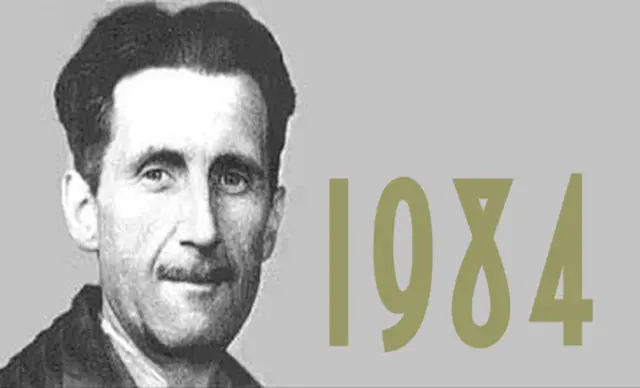
1984: Power, Language, and the Architecture of Psychological Domination

1984: Power, Language, and the Architecture of Psychological Domination

Few novels have entered the cultural bloodstream with the enduring force of Nineteen Eighty-Four. Frequently invoked in political rhetoric and popular discourse, the book is often reduced to a set of familiar images: omnipresent surveillance, totalitarian authority, the erasure of privacy.

Read More →